
Teide Research Uncovers Centuries of Guanche Volcanic Adaptation
University of La Laguna archaeologist Matilde Arnay shared findings from a decade of research on Guanche life in Teide National Park, documenting continuous occupation from the 5th to 17th centuries and exploring their adaptation to volcanic hazards.
Archaeologist Matilde Arnay from the University of La Laguna recently shared the findings of her ten-year research into how the Guanches lived in Las Cañadas within Teide National Park, Tenerife. Her research group is now trying to answer a key question: How did the ancient Canary Islanders change their way of life once they understood the volcanic dangers in their homeland?
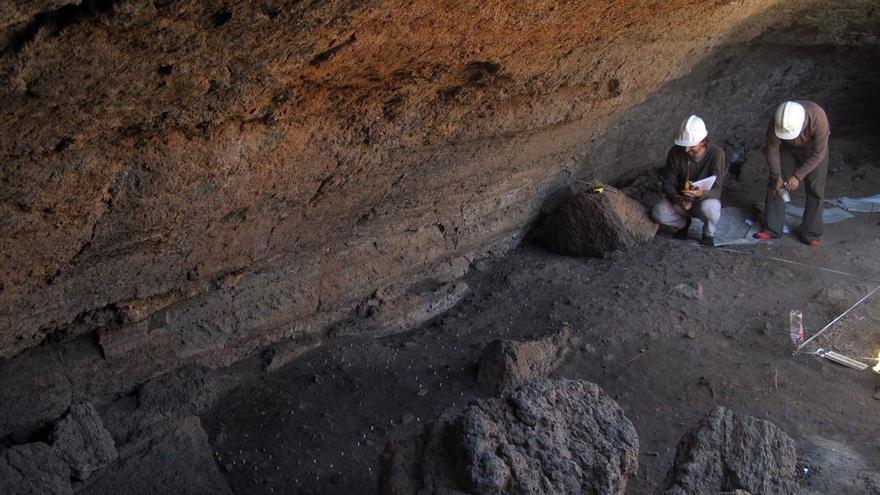
In an interview, Arnay explained what they've found so far. This includes the thorough exploration of remarkably well-preserved caves and shelters in the National Park. Unlike other parts of the island, where urban development and permanent settlements have altered such sites, these in Teide are largely untouched, showing us how these mountain dwellers lived.
To share their findings with the public, the research results are on display at the Cañada Blanca Visitor Center. There, Arnay explains, visitors can see the documentation and even an actual excavation site. "We've carried out digs in various homes and shelters of this kind to understand how they worked," she recalled.
Arnay relates that this detailed study of Teide's dwellings has, for now, provided fascinating insights into their construction, their lava-rock walls, and how the living space was arranged and connected. Often, the center of these shelters featured a large fireplace or hearth.
Another important area of research involves studying 'quarry-workshops' for hand mills, typical of Guanche culture. Here, they extracted porous volcanic rock and then carved it into hand mills. "Several quarries have been located, including two very large ones, and they were found almost perfectly preserved," she specified.
The archaeologist also highlights how this research helps uncover crucial details about the techniques used in these quarries – specifically, how the mills were made and then shared or traded. "It's been a chance to understand a technology we knew nothing about before," she added.
Guanche cabins and shelters are found across Teide, but there are higher concentrations in certain places, such as along the Siete Cañadas path. This is likely because the path crosses the southern part of Las Cañadas, an area rich in resources and water, which would have encouraged larger settlements.
As for the kind of Guanche settlements in this area, especially considering Teide's cold, high-mountain environment, Arnay clarifies that these settlements were always thought to be temporary, even seasonal. They were most used in spring and summer, when people would go up the mountain for various activities like trading goods or gathering resources. This is suggested by the light, portable nature of the cabins, which were well-suited to the environment.
"However," Arnay explains, "at some point, as they became aware of dangers and saw Las Cañadas as a refuge in the mountains, it's possible these settlements became more permanent. This might have been to escape the conditions during the island's conquest." She points to the timeline, noting that these ancient inhabitants continued to live there well into the 15th, 16th, and even 17th centuries.
Matilde also highlights how important this Teide research is for understanding how the Guanches used the stone resources there. They had a deep understanding of the land and its resources. She also notes a significant shift in how the population viewed the land. "It wouldn't always have been done the same way," she says, "and from a certain point, the symbolic value of the territory likely changed."
Arnay is referring to whether the Guanches knew about Teide's last eruption and how that might have shaped their perception of the area. This is a key question the research group is currently exploring.
"The most important achievement so far is documenting a large number of archaeological sites, which show continuous occupation from roughly the 5th century – our earliest date – right up to the 17th century," Arnay stressed.
The research continues with ongoing projects that connect volcanic activity with Guanche behavior. They are excavating caves using new methods to gather this information. This idea is supported by historical records, mainly journalistic accounts from when the Spanish conquistadors arrived, which consistently describe Teide in a "negative" light.
"We're trying to get precise dates to see if these changes happened – for example, if certain areas were inhabited or abandoned at different times," the specialist pointed out. "However, getting accurate timelines is very challenging because we need extremely reliable samples."