
Teide Park Rural Guards' Legality Challenged by Unions
Afmacan, along with several trade unions and local police, has challenged the legality of deploying rural guards in Teide National Park, arguing it usurps public officials' powers and violates existing laws.
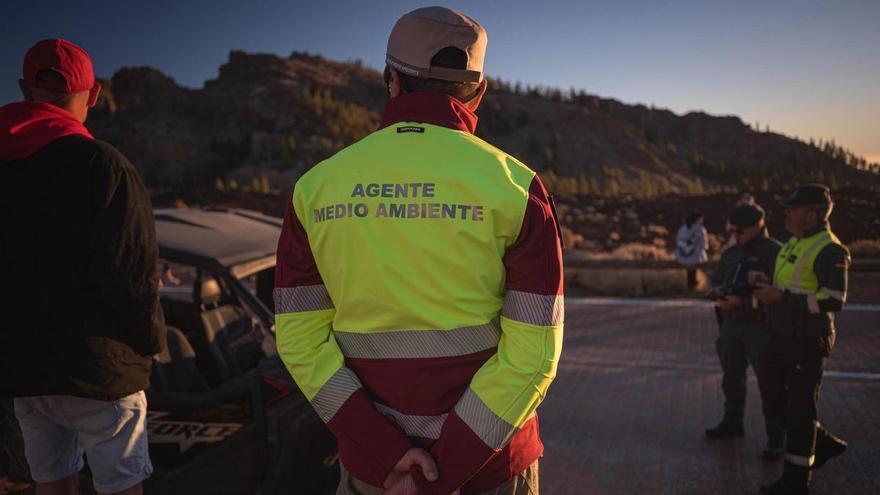
The Association of Forest and Environmental Agents of the Canary Islands (Afmacan), along with several trade unions and local police representatives, has questioned the legality of placing sixteen rural guards in Teide National Park. The group believes this move takes away powers that should belong to public officials. This concern was officially shared with Rosa Dávila, the president of the Tenerife Island Council, in a document filed last week.
Those who signed the letter, including unions like CCOO, CGT, Sepca, UGT, CSIF, and Intersindical Canarias, plus local police delegates from towns within the Park, argue that hiring private security guards for monitoring and control in this protected natural area isn't legally sound. They stress that Teide National Park isn't a rural estate, farm, or hunting reserve – the types of places where regulations allow rural guards to operate. What's more, they highlight that the Private Security Law doesn't give these guards the power to carry out surveillance and control duties in national parks.
Afmacan and the unions have noticed that these rural guards seem to be taking on roles meant for law enforcement officers, like directing traffic or handling traffic complaints, and they look in a way that could confuse the public. In their view, this not only means they're taking over public duties but also breaks Article 87.2 of the Road Safety Law, which sets out who is responsible for traffic issues.
Afmacan, which represents forest and environmental agents across all public bodies in the Canary Islands, insists that monitoring, protecting, and controlling the environment in Teide National Park should only be done by properly authorized public officials, like Forest and Environmental Agents. Instead, they suggest using models for managing trail access that focus on providing information, guiding visitors, and controlling how many people are on the trails. This should always be within the current laws and without stepping on the toes of environmental agents and local police.
This disagreement, which Afmacan and officials from the Tenerife Island Council have discussed in several meetings, could create legal confusion for both the public and the authorities. Because of this, some of the groups involved are considering taking legal action to challenge the decision.