
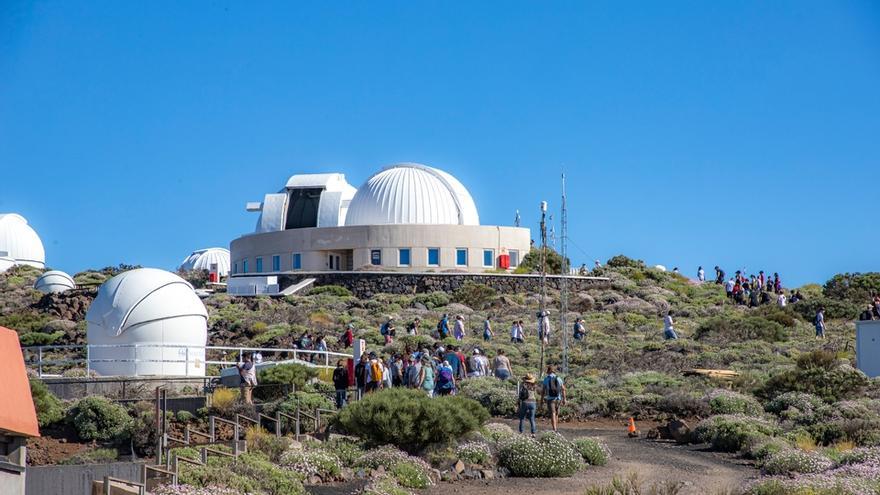
Teide Observatory Launches World’s Largest Automated Optical Telescope System
The completion of the Two-meter Twin Telescope system at Spain's Teide Observatory establishes the world's largest automated optical facility, marking a significant advancement in private-sector-funded robotic astronomy and planetary defense.
The completion of the Two-meter Twin Telescope (TTT) system at the Teide Observatory marks a major milestone for robotic astronomy in Spain. According to the private firm Light Bridges, the launch of the complex's fourth telescope, TTT4, not only boosts its operational capacity but also makes it the largest automated optical system in the world. The telescope successfully achieved "first light" by capturing images of the M104 galaxy, proving that private funding can effectively support cutting-edge scientific research.
The new two-meter telescope has been officially validated by the International Astronomical Union’s Minor Planet Center, which assigned the observatory the code R18 after confirming its precision in tracking asteroids. This ability to respond quickly is vital for planetary defense and space surveillance, where automation and real-time data processing are essential. By successfully imaging the Sombrero Galaxy, the system demonstrated the stability and sharpness required for high-resolution research.
The TTT project is also notable for its versatility. The facility, which now features two 80-centimeter units and two two-meter units, is becoming a key hub for optical communications, including quantum-based projects like LUMALLA. By combining artificial intelligence with large-scale data management, the Tenerife complex is at the forefront of technology transfer and scientific innovation.
The project’s funding model is equally significant. It was financed entirely by private capital, with local investors utilizing the Canary Islands' Economic and Fiscal Regime, specifically the Canary Islands Investment Reserve (RIC). This success shows how tax incentives can help create high-value scientific assets, establishing the archipelago as both a premier location for stargazing and a competitive hub for autonomous technological development.