
Teide National Park to See Increased Policing, Fines, and Permanent Crane to Combat Traffic Violations
La Orotava plans to implement stricter measures in Teide National Park, including a permanent crane, increased fines, and more police presence, to combat traffic violations and protect the natural area.
To tackle traffic problems in Teide National Park, La Orotava City Council is planning new measures, including a permanent crane, higher fines, and more local police officers.
Narciso Pérez, the Security Councilor, announced on Tuesday, October 14, that these plans are "under review" and being developed with the Tenerife Cabildo. The goal is to improve monitoring in this important natural area.
According to Pérez, two recent incidents have convinced the council that stricter controls are needed to address the "constant disregard for the rules" at the summit.
He pointed out that La Orotava is responsible for the largest part of the park, which covers 13 municipalities including Los Realejos, San Juan de la Rambla, Santiago del Teide, Guía de Isora, Vilaflor, Adeje, Arona, Fasnia, Granadilla, La Guancha, San Miguel de Abona, and Arico.
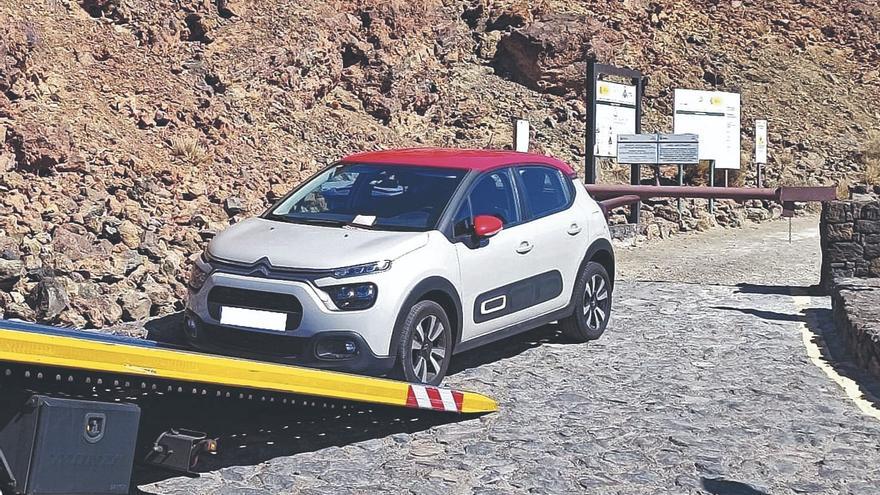
About a month ago, a car blocked the main entrance to the Teide peak at Montaña Blanca. "The driver drove off the road, onto the path, parked, and left the car there, blocking the entrance," Pérez explained. "Not only is it forbidden to go there, but it also prevented emergency vehicles from getting through. It's hard to believe someone would do that, even if they don't know the area well. It's just common sense."
Two weeks ago, another driver parked in the middle of the TF-21 road, next to the Montaña Blanca path. "They left it there, blocking a lane on the main road in the national park, which surprised our officers." In both cases, the Orotava Police had to use a crane to remove the vehicles. The drivers faced fines of 65 euros for the crane service and over 200 euros for illegal parking.
The Security Department is now studying how much the crane service should cost for removals in Teide. "Removing a vehicle in the national park is different from doing it in town, so we're going to increase the price," said Pérez. La Orotava and the UNESCO World Heritage site are more than 40 kilometers apart.
The City Council has also agreed with the Cabildo to have a crane permanently stationed in Teide, at least during peak hours. The Island Corporation will provide funding, believing it's a good solution to the increasing traffic violations.
Pérez noted that the rising number of complaints – over a hundred this year from the Orotava Local Police alone – shows both increased monitoring and drivers' poor behavior.
He added that almost all violations are committed by "tourists in rental cars." "We're often overwhelmed by the number of vehicles going up to the park," he said. "Plus, summers are getting longer, so more people are visiting to see the sunsets, even after September."
The council is also considering stricter penalties. "Our goal isn't to make money, but to discourage bad behavior. Besides the increase in violations, we know Teide is the Canary Islands' natural treasure, and we need to protect it," Pérez emphasized.
La Orotava also plans to send more local police patrols to Teide (which the Guanches called Echedey). This will be possible thanks to the council's plan to increase the police force from 42 to 61 officers.
Ten new officers are currently in training, and nine more positions are being filled. "We've already increased patrols in Teide, especially on weekends, but we want to have an even greater presence as part of the Cabildo's security operation."
Pérez also mentioned that thefts have been reported at some viewpoints, where tourists leave their cars to explore the area. "We need to keep taking steps to end the chaos and avoid overcrowding," he concluded.