
Teide National Park Mouflon Cull Faces Backlash Over Hunting Allocation System
The Canary Islands Hunters Association is challenging the Tenerife Island Council's scoring system for mouflon control in Teide National Park, arguing that the current allocation of extra hunting days is unfair and fails to account for varying geographical conditions.
Game management in Teide National Park is once again sparking debate. The mouflon control campaign, set to run from April 7 to May 12, has hit a snag: the Canary Islands Hunters Association is unhappy with how "compulsory hunting days" are awarded. They have told the Tenerife Island Council that the current scoring system is unfair because it fails to consider the unique geographical and operational challenges of different hunting sectors.
The controversy centers on extra hunting days, which are granted only to teams that catch the most animals. Currently, a female mouflon is worth two points and a male is worth one. The association argues this scale is too simple, as it ignores factors like local population density, session length, and previous hunting pressure. They are asking for "corrective coefficients" to be added for the next phase later this year, or for these extra shifts to be scrapped entirely, as they believe the system creates unnecessary division among hunters.
Despite this administrative friction, the 47 volunteer teams play a vital role in protecting the park’s ecosystem. Data shows these groups are more effective than the private companies hired for the job. Furthermore, the animals culled by hunters are used for food, ensuring that no biomass goes to waste in the protected area.
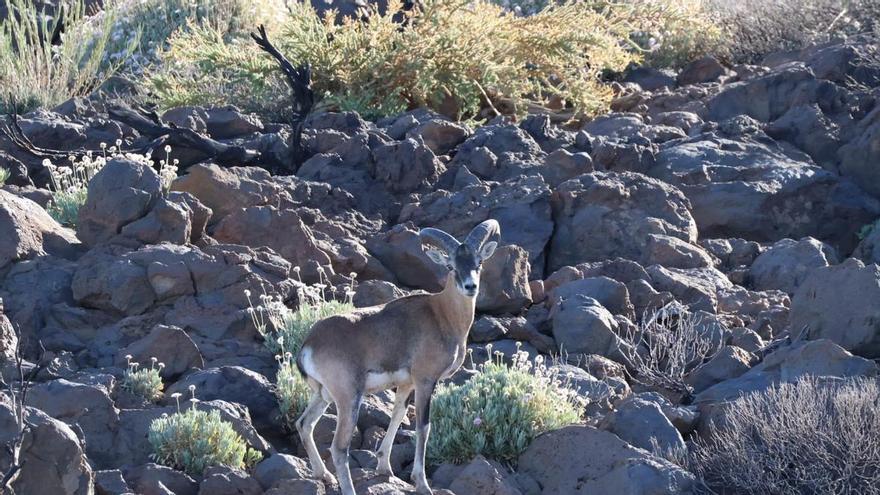
This work is urgent. The park’s new Master Plan (PRUG) mandates the total eradication of the mouflon (Ovis gmelini musimon) within five years. These animals were introduced in 1971 for recreational hunting, long before modern environmental protections were in place. For decades, they have posed a serious threat to the unique plants found on Tenerife’s peaks. The island administration now has one year from the plan's approval last December to finalize a strategy to remove the species for good.