
Teide National Park Launches €1.2 Million Restoration Project to Combat Invasive Species
Teide National Park has launched a 1.2-million-euro restoration project using fencing, reforestation, and drone monitoring to protect its high-mountain ecosystem from invasive species and climate-related damage.
Teide National Park has entered a critical stage in its efforts to restore its high-mountain ecosystem. According to the Canary Islands' Ministry of Ecological Transition and Energy, a new 1.2-million-euro restoration plan—funded by the Recovery, Transformation and Resilience Plan—aims to reverse damage caused by invasive species in one of the archipelago’s most unique botanical areas.
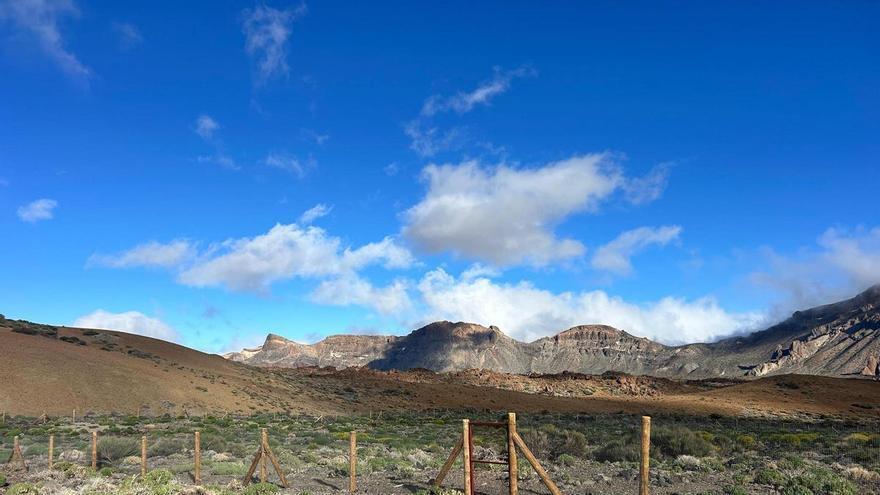
The project centers on installing over 7,000 meters of fencing in key locations like La Fortaleza, Los Tomillos, and Chiqueros. These barriers are designed to keep out mouflons and rabbits, which have long prevented native plants from regenerating. Regional minister Mariano Hernández Zapata noted that the results are already visible, with vegetation and biodiversity thriving inside the fenced areas compared to the overgrazed land outside.
In addition to the fencing, the project includes an active reforestation program. So far, over 2,000 native plants have been replanted, including the tajinaste, wallflower, summit rose, and Teide broom. These species are essential to the landscape of Las Cañadas, having evolved to survive the intense sun, dry conditions, and extreme temperature shifts of the volcanic terrain.
The team is using a mix of traditional methods and modern technology to manage the park. Drones provide high-resolution mapping, allowing experts to monitor the land’s recovery and adjust their conservation strategies in real time. This is particularly important for rare plants like the summit rose, which only grows in a very specific high-altitude zone.
This initiative is about more than just protecting plants; it is part of a broader strategy to shield Tenerife’s natural heritage from human impact and climate change. By preventing erosion and helping the native broom scrubland recover, the government aims to preserve a habitat that is vital to both the island's ecology and its identity.