
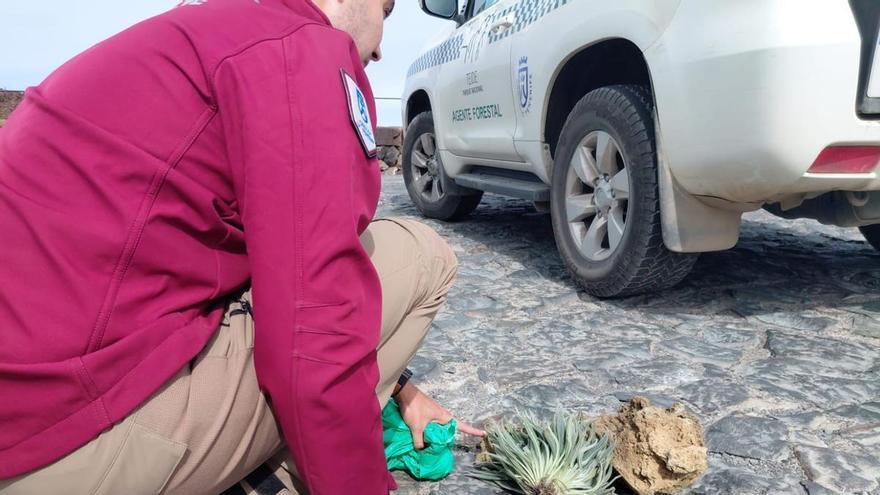
Teide National Park Boosts Security After Tourists Caught Stealing Rare Plants
Teide National Park has launched a new 27-member surveillance unit to protect its fragile ecosystem after catching two tourists attempting to steal rare plants and volcanic rocks.
New surveillance teams at Teide National Park recently proved their worth by catching two German tourists attempting to steal a red bugloss—a rare, iconic plant—and a large volcanic rock. The items were found in the tourists' car, leading to disciplinary proceedings. While the potential fine of 1,500 euros is significant, it is relatively minor compared to the 600,000-euro penalties possible for more severe environmental damage.
This incident highlights the ongoing challenge of protecting a World Heritage Site where removing plants and rocks is strictly forbidden. The red bugloss, which can grow up to two meters tall, is particularly important; after a period of vulnerability, this endemic species is finally thriving again on the peaks of Tenerife. It is one of 58 unique species that make the park’s ecosystem so special and worthy of strict protection.
The catch comes as the park significantly boosts its security, increasing its staff from two officers to 27 professionals. This new team, a mix of Cabildo de Tenerife environmental agents and private security, is part of a 3.4-million-euro, three-year investment. The island’s Department of Natural Environment hopes this move will help manage tourist overcrowding at popular spots like the Chipeque, Ayosa, Lomo del Retamar, and Los Poleos viewpoints.
Beyond monitoring visitors, the new unit will handle emergency responses, fire prevention, and contingency planning. The operation is expected to be fully functional 24 hours a day within the next two weeks. These measures aim to protect the park from the constant pressure of visitors who sometimes disregard the rules meant to preserve the Canary Islands' natural heritage.