
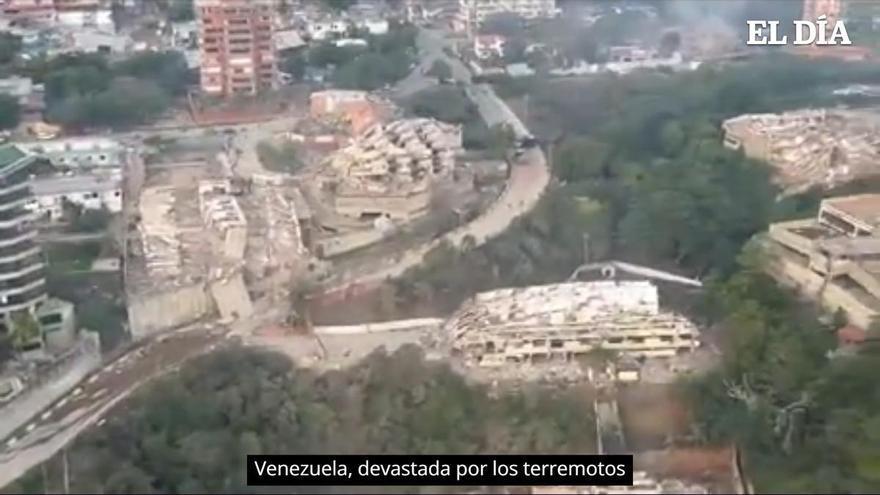
Tectonic Activity in Northern Venezuela Sparks Concerns Over Seismic Risks
Experts from the Canary Islands Volcanological Institute attribute recent powerful earthquakes in northern Venezuela to the ongoing tectonic collision between the Caribbean and South American plates along the San Sebastián fault.
Recent earthquakes in northern Venezuela, some exceeding magnitude seven, have drawn attention to the region's complex tectonic activity. According to the Canary Islands Volcanological Institute (Involcan), these tremors are caused by the Caribbean and South American plates grinding against each other. These plates shift by about two centimeters each year, building up pressure on local fault lines that eventually releases as powerful earthquakes.
Experts at Involcan explain that these quakes are not isolated incidents but part of a larger, ongoing rupture process. The 200-kilometer-long San Sebastián fault, stretching between San Felipe and Caracas, was the primary source of the recent activity. The energy traveled eastward toward Caracas and La Guaira, causing prolonged shaking. This impact was likely worsened by "seismic directivity"—the way energy spreads—and the fact that the region sits on soft soil, which can amplify earthquake waves.
History shows that these events are recurring, with similar large-scale quakes occurring in 1812 and 1900. Because the area is heavily fragmented by faults, one earthquake can trigger a chain reaction, known as a "seismic storm." While the risk of major aftershocks typically fades over time, experts warn that it remains difficult to predict exactly how the Boconó and San Sebastián faults will behave next.
Ultimately, the damage caused by an earthquake depends largely on the strength of local infrastructure and how well a society is prepared. Comparing this to countries like Japan, which have strict building codes, highlights the vital importance of disaster management.
The situation in the Canary Islands is quite different. Located on the African Plate, the islands do not have the massive fault systems found in Venezuela. While the archipelago does experience smaller tremors related to volcanic activity or minor faults, these are much more limited in scope. Even so, the institute notes that constant monitoring remains essential to manage any potential local risks.