
Taco Mountain Illegal Mining Trial Begins for Ex-Councillor, Officials
A trial is set to begin tomorrow for former Santa Cruz de Tenerife Urban Planning Councillor Norberto Plasencia and two officials, accused of urban planning misconduct and alleged illegal mining at Taco Mountain, 15 years after the initial complaint.
A trial is set to begin tomorrow, Tuesday, for the alleged illegal mining of materials from Taco Mountain. The defendants are Norberto Plasencia, a former Urban Planning Councillor for Santa Cruz de Tenerife, along with two officials: Víctor Reyes, who was the secretary of the Urban Planning Department, and Ana Toval, a legal advisor for the same department. The Public Prosecutor's Office is pursuing charges against all three, 15 years after an investigation started due to a complaint from local residents in 2010.
The Public Prosecutor's Office accuses them of urban planning misconduct. They are seeking a nine-month prison sentence for each defendant, along with a 10-year ban from holding any public office or employment. The trial was first requested in 2022 but has been postponed several times, including on May 26th. New dates for hearings have been set for December 2nd and 10th.
Both the Santa Cruz de Tenerife and La Laguna city councils are involved in the case as plaintiffs, alongside the residents' group that originally filed the complaint.
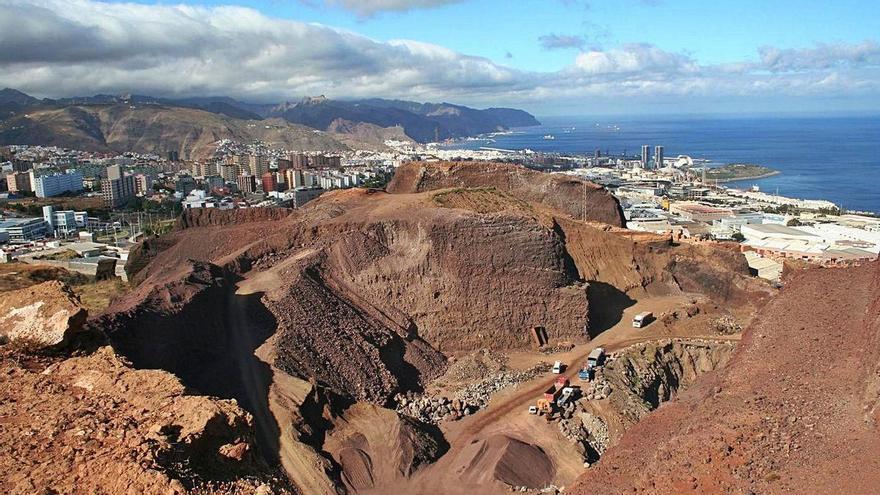
The core of the case involves alleged planning and environmental violations linked to the operation of the Taco Mountain quarry. This quarry covers an area of 37,450 square meters, with 35,336 square meters used for extraction. The mining activity created an 80-meter deep pit, and processing plants were set up at the bottom.
The problems began due to conflicts over how the land at Taco Mountain was classified and meant to be used. Part of the land was designated for future housing or recreation, but specific development plans were never put in place. Another section was part of a public park system, where industrial activity is strictly forbidden. Adding to this, the city's 1992 General Urban Plan (PGO) stated that no licenses for land use or excavation could be issued without a special plan being approved first. The Island Territorial Planning Plan (PIOT) also required any such plan to include provisions for restoring the quarry.
Given these rules, the Public Prosecutor believes that several irregularities occurred in how the aggregate extraction plants operated. They claim the company, despite having a license for mining, worked outside its approved boundaries. It also allegedly failed to follow the agreed mining methods and ignored several requirements from its Environmental Impact Statement, such as monitoring programs and submitting regular reports.
The Public Prosecutor also points out that as early as 2000, even before an environmental impact report was written and approved, an aggregate extraction and processing plant was operating without the necessary permits. This wasn't an isolated incident; inspections in 2011 and 2012 confirmed that other industries in the area were also mining without proper licenses.
One plant, for example, received a cease and desist order in March 2011 because it didn't have an operating license, yet it continued working. Its installation permit was eventually cancelled in 2012 because it didn't follow the original project plans and made unauthorized changes. The Cabildo de Tenerife, supported by local environmental reports, called its operations "annoying, unhealthy, and harmful" due to the noise, vibrations, and dust affecting nearby residents. The Public Prosecutor also alleges that some licenses were issued without the required positive technical reports.
Specifically, the Public Prosecutor claims that Ana Toval pushed for resolutions that favored granting licenses and ownership changes, even when technical reports advised against them. Víctor Reyes allegedly supported these proposals and even drafted new ones, despite being aware of the technicians' negative assessments, thereby helping to create a false sense of legality. Norberto Plasencia is accused of granting an operating license in 2002 and approving ownership changes, despite knowing that technical reports were unfavorable.