
Study Reveals How Bottlenose Dolphins Use Echolocation to Identify Material Composition
A new study published in The Journal of the Acoustical Society of America reveals that bottlenose dolphins use sophisticated biosonar to instinctively identify the material composition of objects, providing critical insights for marine conservation efforts.
A recent study published in The Journal of the Acoustical Society of America reveals how bottlenose dolphins use biosonar to navigate their environment. Researchers from the University of Southern Denmark and the Loro Parque Fundación found that these dolphins can instinctively identify the material of objects that look identical, relying entirely on echolocation.
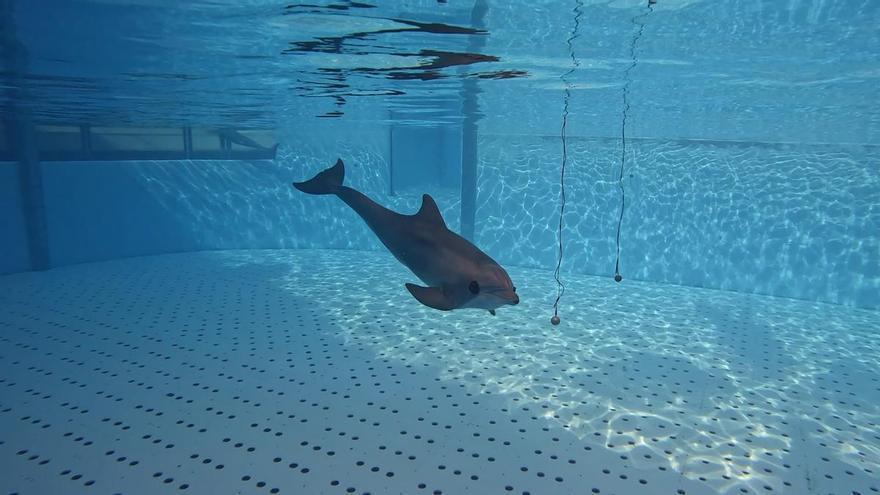
During the study at Loro Parque, two dolphins named Achille and Clara were tasked with identifying spheres made of steel, brass, aluminum, and plastic. Using underwater cameras and hydrophones, scientists observed the dolphins adjusting their swimming paths and the frequency of their ultrasonic clicks in milliseconds. This process allows the dolphins to build a precise mental map of an object’s density and composition. The researchers noted that this active exploration strategy highlights unique evolutionary adaptations compared to other species, such as harbor porpoises.
The study also highlights the value of collaboration between zoos and academic institutions. The dolphins participated voluntarily, thanks to years of positive reinforcement training, which allowed researchers to collect high-precision data in a controlled setting. Wolfgang Kiessling, president of the Loro Parque Group, emphasized that combining high standards of animal welfare with scientific research is essential for protecting biodiversity.
This work is particularly important as human-made noise from shipping and industry continues to disrupt marine ecosystems. Lead scientist Sara Torres noted that understanding how dolphins process sound is vital for conservation. This data helps experts predict how underwater noise interferes with the animals' ability to navigate, communicate, and hunt.
Supported by the Office of Naval Research, the Human Frontier Science Program, and the Carlsberg Foundation, this project is the first to combine cognition and acoustics in a comparative study between species. These findings not only establish the Tenerife-based center as a leader in international research but also provide the tools needed to better protect wild dolphin populations, whose survival depends on a healthy acoustic environment.