
Study Reveals 12,000-Year Climate and Human History of Canary Islands
Researchers from the University of La Laguna have reconstructed a 12,000-year climate and human history of Tenerife by analyzing sediment layers in the Malpaís de Rasca, providing critical insights for future climate modeling.
A new study led by the University of La Laguna (ULL) has significantly advanced our understanding of the Canary Islands' climate history. By analyzing sediment layers in the Malpaís de Rasca in southern Tenerife, researchers have successfully reconstructed a 12,000-year timeline. This far exceeds the original goals of the IMPACT project, which was initially funded by the CajaCanarias and "la Caixa" foundations to cover only the last 2,000 years.
This record, spanning the entire Holocene epoch, provides a unique look at how island ecosystems adapt to environmental change. Margarita Jambrina, coordinator of the ULL’s Environmental Geochemistry and Global Change group, explains that understanding how the islands responded to past climate shifts is essential for improving models that predict the impact of global warming today.
The study is notable for combining paleoclimatology with archaeology. One of its key findings is evidence of the "Green Sahara" or African Humid Period, which influenced Tenerife between 12,000 and 8,200 years ago. This confirms that the region once experienced much higher humidity and rapid climate shifts, proving that the islands' natural response to these changes has been complex and varied.
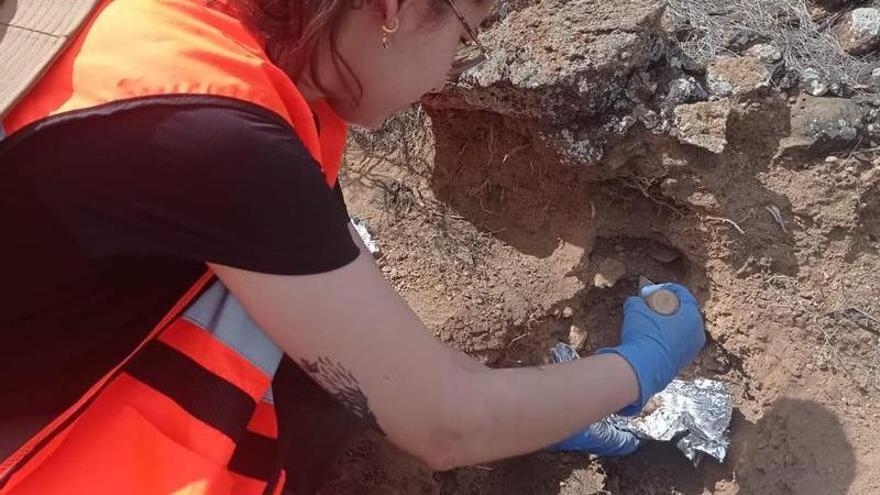
The sediment analysis also reveals the human history of the Malpaís de Rasca. Excavations uncovered remains of domestic animals and sheep-related biomarkers, confirming that the indigenous Guanche people practiced livestock farming alongside fishing. The record even tracks more recent history, identifying traces of agricultural pesticides from the 1940s that are now banned under EU regulations.
Ultimately, this research provides the scientific community with a vital tool for testing future climate scenarios. By understanding how the landscape adapted to past changes, researchers now have a stronger foundation for anticipating the environmental challenges the archipelago will face in the coming decades.