
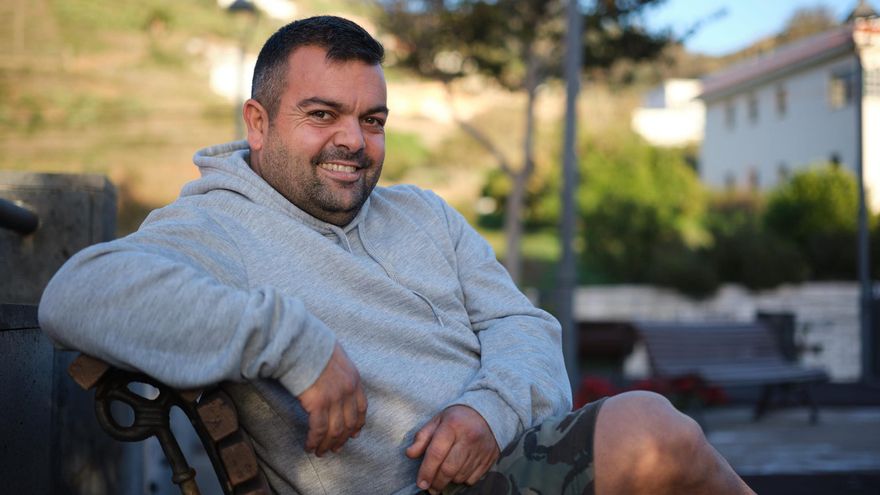
"Street of the Poor" Lottery Winner Still Works Cleaning Job
Five years after winning a share of the 2018 Christmas Lottery "Gordo" with a ticket bought on "Los Pobres Street," Tenerife's Mario Fernández Peraza used his 322,000 euro prize for family stability but continues his cleaning job, asserting the win didn't truly change his life.
Mario Fernández Peraza, from Tenerife, had a stroke of luck in 2018 when he won the top prize in the Christmas Lottery. His win came with some ironic twists. For one, he gained weight after winning the "Gordo" (the big prize). Also, the winning ticket was bought from a lottery shop on "Los Pobres Street" (Street of the Poor) in his hometown of Tegueste, inside the Bazar y Modas Casa Félix store. Mario wasn't rich before his win, and even five years later, he still isn't.
Now 45, Mario still lives in Tegueste with his three daughters. He still works for the town's cleaning company, even though a tenth of the winning ticket (number 3347) gave him a big financial boost. He says the win didn't completely change his life. "Winning the Gordo was important, of course," he admits, "but other things that happened before and after that lottery draw were what truly changed my life."
"I've lost count of how many lottery tickets people have rubbed on my back," Mario laughs. He's sitting in the square of the Sacred Heart parish in Pedro Álvarez, a peaceful village in the Anaga mountains. He shares his story next to a unique Christmas tree made from dozens of empty wine bottles, reflecting the charm of this rural Tenerife spot. As he speaks, a neighbor stops, recognizes him as the "Gordo" winner, and asks to rub a lottery ticket on his back. "See?" Mario says, "There are so many..."
The 322,000 euros that landed in his bank account a few days after December 22nd didn't make him a millionaire. This was because the Treasury took 78,000 euros from the total 400,000 euro prize.
Still, he was able to buy a house, an apartment, a Mercedes van, and get full dental work for himself and his partner. "I also enjoyed some really good meals that I couldn't afford before. That's why I gained weight," he admits. "But I tried to use the prize money mainly to give my family a home and as much stability as possible."
The lottery win came at a time of big changes in Mario's life. The summer before, he had started working for Urbaser, the company that collects waste for Tegueste City Council. He had also ended one relationship and begun a new one. Just as he was getting used to these new beginnings, the "Gordo" arrived.
Before joining Urbaser, Mario and four friends he met at the bar where he worked used to play La Primitiva lottery every week. "We had about a hundred euros left in a shared fund," he explains, "so we decided to buy a Christmas Lottery ticket for each of us."
Mario had other lottery tickets too. On December 22nd, he was out doing errands when his friends from the bar's lottery club called. "One of them called, saying we'd won and asking how he could give me the ticket," Mario recalls. "I thought it was a joke."
He had even written down the number wrong in his notebook, so it didn't match. And he didn't have his ticket with him. He met his friend at a cafe, where his friend handed him the ticket for number 3347 and insisted they had won. "I realized it wasn't a joke when I looked at the ticket, then at the TV, and saw it was indeed the 'Gordo'," he remembers. "It took a while for it to sink in."
Later that day, the five friends went to a local restaurant to celebrate. "One of them interrupted the fun to say, 'Haven't you noticed there are two million euros on this table right now?'" Mario recounts. The toasts and discussions about how they'd spend the money then continued.
After that, he celebrated with his family and other friends. His sisters cried, his father was overjoyed, and Mario felt thrilled, but also a touch of sadness that his late mother couldn't share the special moment with him.
"The money really came in handy," he explains. "I was able to buy things I never could have afforded otherwise, like two houses." He had already wanted a single-story house in Pedro Álvarez, which he bought outright. Mario renovated it, sold it, and invested the money in his father's house after his father passed away. Unlike the first house, this one has land for growing vegetables and fruit trees, typical of homes in Pedro Álvarez.
Many stories came from his win. For example, right after he won, several people called offering to buy his ticket for 400,000 euros, even though 78,000 euros would go to the Treasury. He refused. Old acquaintances suddenly reappeared, and he became popular. "Many people in the village found out I had won; this is a small place where it's very difficult to keep secrets," he says. He even received offers to buy all sorts of things, including a business.
"I did have some parties, I won't deny it," he clarifies, "but mostly, I tried to be as responsible as possible for my family's sake." He doesn't remember the exact winning number, only that it ended in 7 – considered a lucky digit and the most popular ending in Spanish lottery history. Is anything left of the prize? "Some savings for unexpected situations," he replies.