
Storm Rescue Exposes Growing Homeless Crisis in Santa Cruz de Tenerife
The rescue of five people from the Santos ravine during storm "Therese" has exposed the precarious living conditions of homeless individuals in Santa Cruz de Tenerife and the urgent need for a coordinated government response to address the city's strained social services.
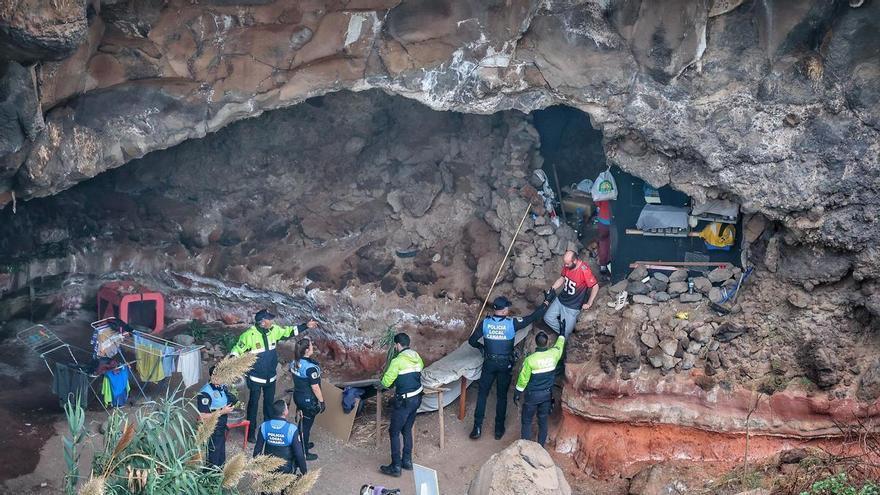
The recent storm "Therese" has highlighted the extreme vulnerability of homeless people living in Santa Cruz de Tenerife. On March 24, emergency services had to rescue five people and a pet trapped by rising water in the Santos ravine. This incident brought to light that a dozen people are living in caves along the ravine—a space that is both unsafe and unfit for human habitation.
The people living in these makeshift settlements come from diverse backgrounds, including migrant families and those with serious health issues. One example is a Romanian man who, after losing his job and home, moved into the caves with his son, who has mental health struggles, and his 88-year-old mother, who uses a wheelchair. These residents must travel several kilometers every day just to find water, illustrating a level of social exclusion that could affect anyone facing a sudden financial crisis.
The Santa Cruz de Tenerife City Council’s Social Care department reports that, despite offering help, many of these individuals are reluctant to move to the municipal shelter. This comes at a time when local services are under immense pressure, having assisted 732 homeless people last year. Official data shows a complex situation: over 30% of these individuals suffer from mental health conditions that are not currently covered by the Canary Islands Health Service. Furthermore, 55% of those seeking help are not originally from the municipality, highlighting the need for a coordinated effort between the Canary Islands Government, the Cabildo of Tenerife, and local authorities.
Homelessness in the capital primarily affects men (81%), with most individuals aged between 40 and 65. The city’s resources are currently stretched to their limit; the municipal shelter is housing about 30 people over the age of 65 who require specialized care that the facility is not equipped to provide. Local authorities acknowledge that informal settlements in areas like the Santos ravine and the Southwest coast remain a major challenge, requiring a broader, multi-level government response to ensure the safety and dignity of those affected.