
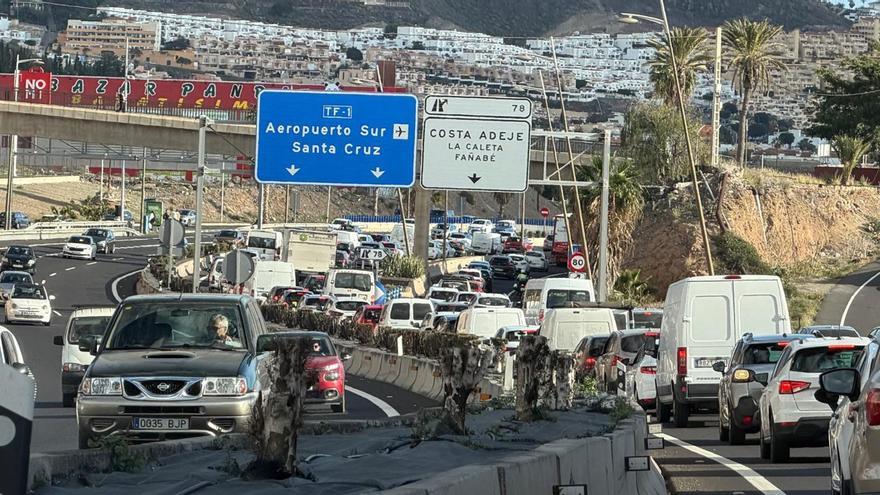
Stalled TF-1 Highway Project Threatens Decade of Gridlock in Southern Tenerife
The stalled project to bury the TF-1 highway in southern Tenerife faces a potential decade-long delay following a breakdown between the Canary Islands government and contractors, threatening to exacerbate severe traffic congestion and economic losses.
The stalled project to bury the TF-1 highway between Playa de las Américas and Fañabé is more than just an administrative failure; it threatens to leave southern Tenerife gridlocked for the next decade. The plan, designed to ease congestion on one of the island’s busiest roads, is now in legal limbo following a breakdown in communication between the Canary Islands’ Ministry of Public Works and the contractors.
The cost of this delay is significant. Local businesses estimate that traffic congestion on this stretch causes over 500 million euros in annual losses. These costs stem from wasted fuel, lost productivity, and a poorer experience for tourists, who must now leave for the airport hours in advance to avoid missing flights. The Adeje City Council reports that more than 100,000 vehicles use this road daily, with drivers often waiting over an hour to travel just ten kilometers.
The history of the project highlights a mismanagement of public funds. Although the plan was approved in 2018 and a 90-million-euro contract was awarded in May 2023, progress has been minimal. Of the 37 million euros set aside for the 2023–2026 period, only 600,000 euros have been spent, primarily on initial planning. Since June 2025, the Ministry has suspended work and moved to cancel the contract, with regional president Fernando Clavijo citing technical flaws in the original design.
This decision has sparked political criticism. The local PSOE has called the government’s handling of the situation contradictory and is demanding that the project be restarted immediately. The primary concern is that cancelling the contract entirely would force the entire process to begin from scratch. Between new planning, bidding, and construction, a final solution could be delayed by up to ten years.
The original 117-million-euro proposal aimed to transform the area by burying three kilometers of the highway. It included plans for a boulevard with green spaces, bike lanes, and pedestrian paths, along with four new junctions to improve access to areas like Torviscas and Fañabé. Given the current uncertainty, local authorities are urging the government to update the design to meet modern standards rather than scrapping the contract, warning that the region cannot afford another decade of administrative delays.