
Spanish Universities See Surge in Older Adult Enrollment as Lifelong Learning Goes Mainstream
Spanish universities, particularly in the Canary Islands, are experiencing a surge in enrollment as academic programs for older adults transition from niche offerings to mainstream pillars of higher education.
Spanish universities are seeing a major shift in their classrooms as programs for older adults move from the sidelines to the mainstream. A recent report on academic activity in the Canary Islands highlights this trend, with the University of La Laguna (ULL) and the University of Las Palmas de Gran Canaria (ULPGC) becoming hubs for a new model of active aging that is forcing universities to rethink their services.
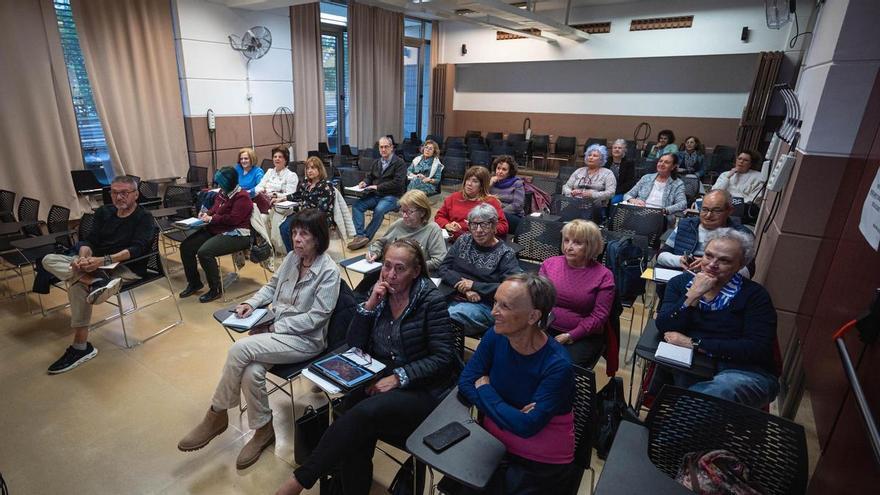
At the ULL, the change is striking: the program has grown from just 70 students in 2008 to over 300 today—a number that climbs even higher when including extra courses on wellness and digital skills. Meanwhile, the ULPGC has reached a record high of 1,530 students, welcoming 300 new participants this academic year alone. Universities describe this surge as exponential.
The profile of these students has also evolved. Many are highly educated, including retired teachers, lawyers, and engineers, which has pushed universities to raise the academic rigor of their courses. This shift is partly due to the 1970 General Education Act, which opened up access to education for a generation that is now eager to continue learning. While the programs are open to anyone over 45, the average student is around 70, and women currently outnumber men seven to three.
These programs are publicly funded, with retirees receiving a 50% discount. The curriculum focuses heavily on the humanities, especially art. However, this popularity brings logistical challenges. Isabel Karely Pérez, Vice-Rector for Culture and University Extension at the ULL, notes that a lack of physical space is the biggest barrier to further growth, as the university constantly adapts to meet the needs of its highly motivated students.
The impact of this trend goes beyond the classroom. By integrating these students into labs and debates alongside faculty, universities are fostering a vibrant intellectual exchange. As Spain’s population ages, these institutions are proving that they are more than just training centers; they are vital hubs for a generation that is determined to keep learning and stay intellectually active.