
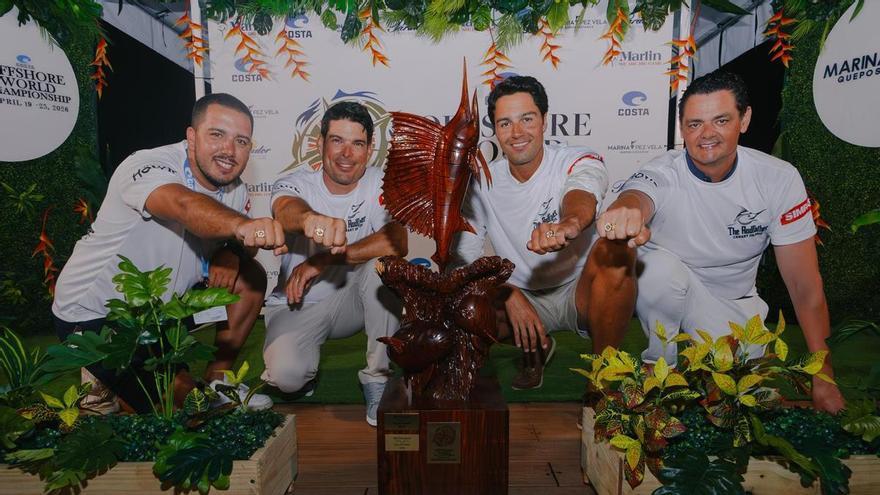
Spanish Team "The Rodfather" Wins 2026 Costa Offshore World Championship
The Spanish team "The Rodfather" made history by winning the 2026 Costa Offshore World Championship in Quepos, Costa Rica, outperforming 38 international teams to secure the prestigious title.
The Spanish team "The Rodfather" has made history by winning the 2026 Costa Offshore World Championship in Quepos, Costa Rica. This milestone victory places Canarian anglers Carlos Cabrera, Adrián Arcay, Jeremy López, and Paulino Montesdeoca at the top of a sport that requires both immense physical stamina and technical precision. They outperformed 38 teams from 22 countries to secure the title.
The tournament is often compared to the Olympics due to its high level of difficulty. To ensure a fair contest, the championship requires teams to rotate boats and crews daily, preventing any single group from gaining a technical advantage. Over three days, the Spanish team earned 10,920 points by catching and releasing 73 sailfish, one blue marlin, and one black marlin, all in accordance with strict sustainability protocols.
The team qualified for the event after winning the XXXII Puerto Calero Marlin Cup in Lanzarote. Their success highlights the Canary Islands as a premier destination for big-game fishing, thanks to the region's unique underwater topography and currents. For the members of "The Rodfather," the win is the result of years of hard work and personal sacrifice, including overcoming the challenges posed by the volcanic crisis in La Palma. Their victory has become a symbol of resilience for their community.
This achievement reflects a growing trend toward the professionalization of sport fishing in Spain, where "catch and release" practices are now central to the sport. By proving their skill on the world stage, the team has helped position the Canary Islands as a top-tier destination for international anglers. Beyond the trophy, the win has sparked a conversation about the need for greater institutional support and media recognition for a sport that, while deeply rooted in island culture, has long remained out of the spotlight.