
Spanish Police Dismantle Italian Criminal Network Operating Across Canary Islands and Catalonia
Spanish police, in coordination with Italian authorities and Eurojust, have dismantled a sophisticated criminal network operating across the Canary Islands and Catalonia, resulting in four arrests and the seizure of drugs, weapons, and forged documents.
The recent dismantling of an Italian criminal network operating between the Canary Islands and Catalonia highlights how international crime groups are increasingly using Spain as a base for their activities. Police arrested four individuals wanted by Italian authorities under European Arrest Warrants, a success that demonstrates the effectiveness of judicial cooperation across the European Union.
The group was highly organized, using sophisticated methods to blend into society. A key part of their operation involved systematically forging identity documents, which security experts warn poses a serious challenge to border security. The National Police’s "Punto Atenas" unit—specialists in document verification—played a crucial role in the investigation by confirming identity theft in real time and providing the forensic evidence needed for the case.
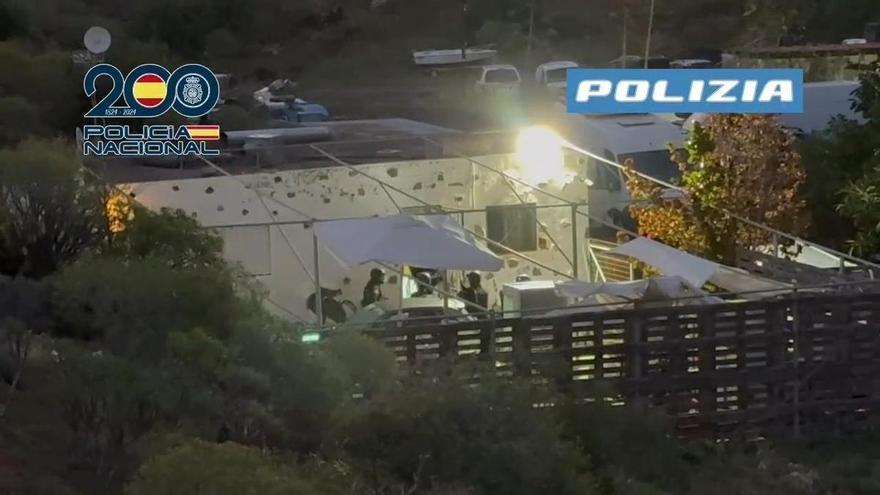
Coordinated by EUROJUST and the Italian Carabinieri, the operation led to the arrest of three suspects in Santa Cruz de Tenerife and one in Barcelona. During a search of a property in San Miguel de Abona, Tenerife, officers discovered firearms, ammunition, and Italian license plates, confirming the group’s dangerous capabilities. They also seized MDMA, cocaine, cannabis, weighing equipment, and a large amount of cash, suggesting the network was involved in both drug trafficking and providing logistical support for fugitives.
This operation is part of a broader national strategy to combat "New Destabilizing Threats to Internal Security," which aims to neutralize groups that use hybrid tactics to undermine public safety. By breaking up this cell, police have removed a significant criminal presence that had been operating under the radar in Spain. Investigators are now analyzing a large number of seized electronic devices to determine if the network has further connections across Europe.