
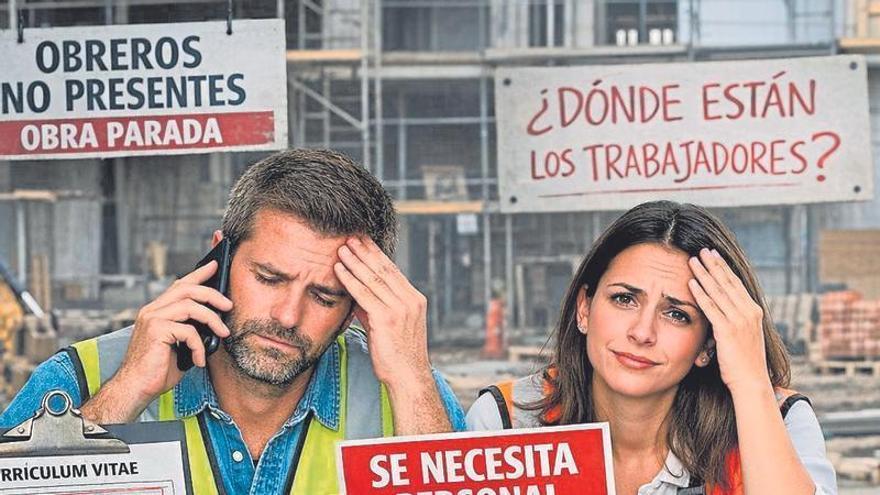
Spanish Businesses Face Labor Crisis Amid Rising Absenteeism and Staff Shortages
Spanish businesses, particularly in the construction sector, are facing a structural crisis as labor shortages and rising absenteeism threaten economic growth and productivity.
A recent labor market analysis shows that Spanish businesses are facing a critical struggle: a shortage of workers combined with rising rates of absenteeism. This issue affects many industries, but it is hitting the construction sector particularly hard, where the difficulty of filling vacancies is made worse by a constant loss of productive hours.
This has become a structural problem rather than just a human resources challenge. Private companies, especially small and medium-sized enterprises (SMEs), are struggling to operate because they cannot maintain a full staff. Frequent, often unjustified absences are driving up costs and hurting competitiveness. This creates a market paradox: high demand for labor exists alongside a pattern of some workers failing to meet their contractual obligations.
From an economic standpoint, this situation is a challenge for public policy. A lack of effective oversight has allowed these habits to become entrenched, damaging professional accountability. Without a firm response from authorities, businesses are discouraged from investing and growing, and it creates an unfair environment for the many workers who remain committed to their jobs.
The long-term health of the economy depends on the government implementing stricter oversight and addressing absenteeism as a matter of economic efficiency. Without clear political action and better enforcement, labor shortages could become permanent, limiting the country’s growth and penalizing the businesses that keep the economy moving. Establishing a framework that balances labor rights with individual responsibilities is now an urgent priority for a stable labor market.