
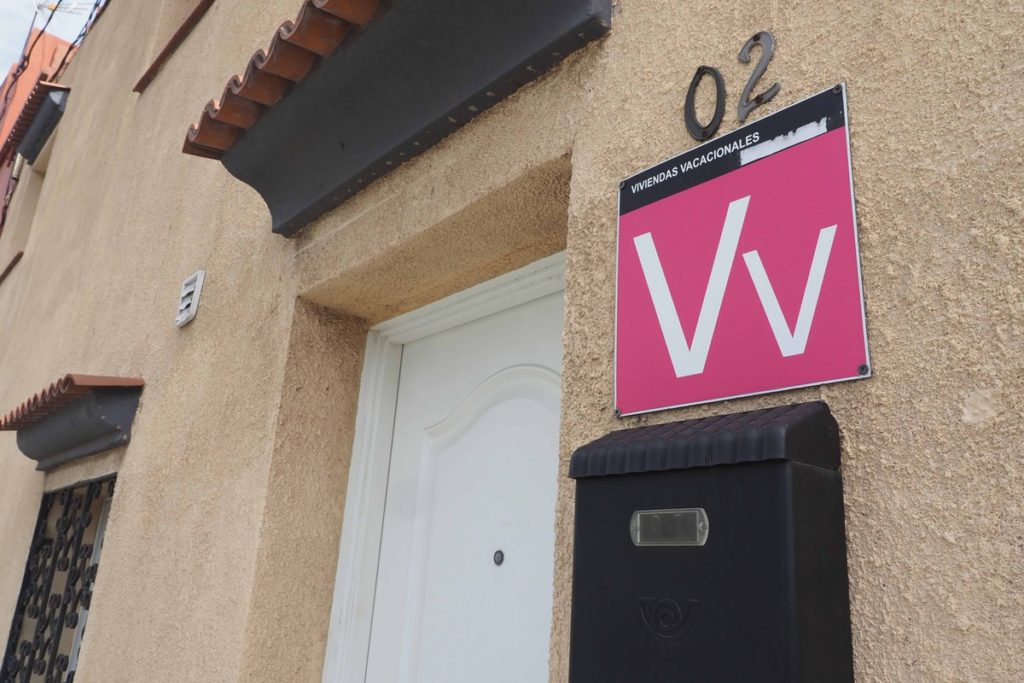
Spain’s Vacation Rental Market Sees Sharp Annual Decline Amid Regional Fluctuations
Spain’s vacation rental market is experiencing a period of volatility, marked by a significant annual decline in total listings despite a recent rebound that continues to strain local housing availability.
Spain’s vacation rental market is currently shifting, though the impact varies significantly by region. While the Canary Islands have seen a slight dip—losing 2,330 rental units over the past year—the region remains a major player, holding the fourth-largest supply of tourist accommodation in the country.
This cooling trend is happening nationwide. According to the National Statistics Institute (INE), there were 341,001 tourist properties across Spain as of last May, a 10.7% drop compared to the previous year. This represents the second-largest decline on record, with over 40,000 units leaving the market. However, the trend is not strictly downward; between November 2025 and May 2026, the market actually rebounded, adding 11,237 new listings.
The Canary Islands remain central to this sector. The province of Las Palmas has the third-highest concentration of vacation rentals in Spain (26,998 units), while Santa Cruz de Tenerife ranks fifth (21,358 units). Specific towns like La Oliva and Arona also rank among the top ten municipalities nationwide for the highest volume of tourist rentals.
These figures highlight the ongoing tension between local regulations and the influence of booking platforms. While the year-on-year decline may reflect stricter rules or shifting profits, the recent six-month increase shows that tourist rentals continue to put pressure on local housing stocks. For the Canary Islands, these numbers underscore a heavy reliance on tourism, a model that authorities are now struggling to balance against the growing need for affordable long-term housing.