
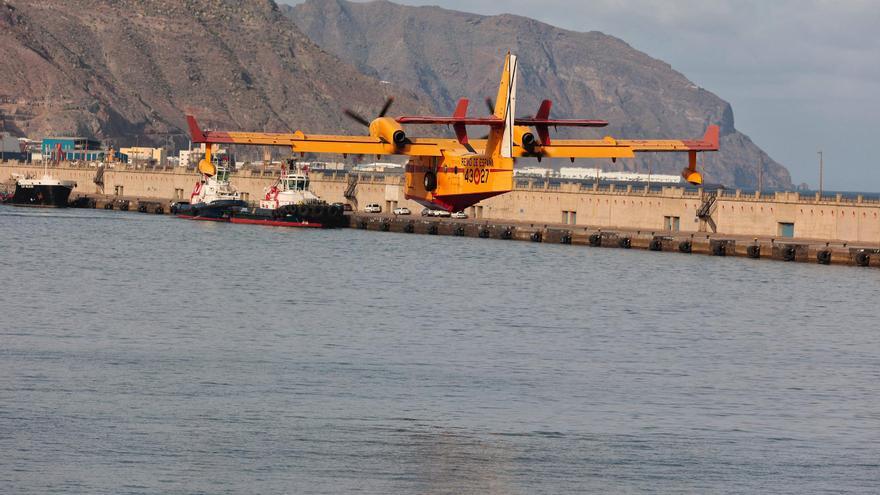
Spain's National Court Defers Tenerife Seaplane Base Appeal
Spain's National Court has declined to rule on an appeal by developers of a proposed seaplane base in Tenerife, which was halted by environmental authorities due to viability concerns and regulatory obstacles, transferring the case to the High Court of Justice of Madrid.
Spain's National Court has decided it cannot rule on an appeal regarding a proposed seaplane base in Tenerife's port. The appeal was filed by the project's developers after the Central Government's environmental agency decided to stop the approval process for the base.
According to the company behind the project, all official reports are currently negative. This includes feedback from the Port Authority, Spanish Airports and Air Navigation (AENA), and the government. The company believes this is because it's the first project of its kind in Spain.
The National Court cannot handle the case because the decision to end the process came from an authority lower than a minister or secretary of state. Therefore, the High Court of Justice of Madrid (TSJM) will now make the ruling. Neither the company nor the State Attorney's office has any objection to this.
The decision being challenged effectively ends the administrative process. This means that after reviewing the project's environmental impact, the authorities have decided it's not viable. One major obstacle for this and other commercial seaplane services in Spain has been the current regulations.
These rules severely limit seaplane operations in Spanish waters. Currently, nearly all seaplane activity is restricted to firefighting aircraft used by the Air Force, the Ministry of Agriculture, and some regional governments.
The idea for this seaplane service started in 2022. The goal was to connect Gran Canaria and Tenerife in just one hour. At the time, it was announced that flights would begin soon, after many decades without such a service.
This project to bring back seaplane travel is led by a company mainly funded by Canarian investors, with some involvement from a Danish company.
The company's managers said they founded the operator to improve connectivity between the islands with faster transport. They claimed it would be possible to travel from the heart of Santa Cruz de Tenerife to the center of Las Palmas de Gran Canaria in only half an hour.
Other benefits would include quicker security checks and avoiding the travel and waiting times typically spent at each island's airports.
The company estimated it would carry about 15,000 passengers each year. Its developers always maintained that the seaplanes would need very little space to maneuver in the port bay – just 200 meters in front of the old jet foil station.
Because of this, they designed the seaplane base project so planes could land in two minutes, without disrupting other port traffic.
While the Spanish Aviation Safety Agency (AESA) conducted an environmental assessment that set out conditions and alternatives, it didn't outright reject the project. However, various industry groups later started to voice their opposition.