
Spain Prepares for Historic Solar Eclipse on August 12
Spain is preparing for a historic solar eclipse on August 12, marking the first time in over a century that the phenomenon will be visible from the country.
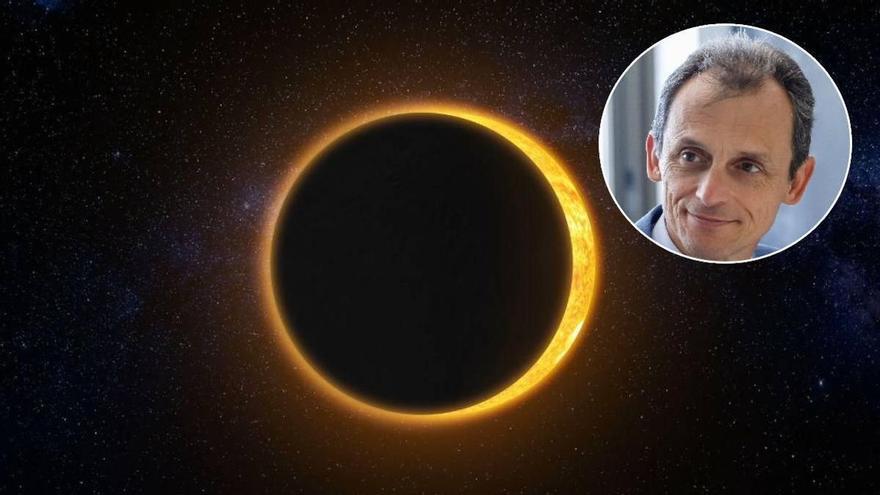
Spain is preparing for a historic astronomical event: a solar eclipse on August 12. Astronaut and engineer Pedro Duque notes that this will be a landmark moment for the country, as it is the first time in over a century that such a cosmic alignment will be visible from Spanish territory.
Duque explains that the eclipse is possible due to a remarkable geometric coincidence. Although the Sun is 400 times larger than the Moon, it is also 400 times further away, allowing the Moon to cover the solar disk with near-perfect precision. However, this is only temporary; as the Moon slowly drifts away from Earth, total solar eclipses will eventually become impossible.
In the Canary Islands, the eclipse will be partial rather than total. On islands like Tenerife, the Sun will be 73% obscured. The islands' volcanic landscape—particularly around Mount Teide and the Roque de los Muchachos—provides an ideal vantage point, offering clear views of the western horizon.
The former Minister of Science notes that the eclipse, beginning at 7:30 PM, will bring noticeable environmental changes. Beyond a drop in temperature and fading light, observers may notice unusual wildlife behavior and unique optical effects, such as crescent-shaped shadows cast through tree leaves.
In regions where the eclipse is total, viewers will be able to see the solar corona for less than two minutes. Only during this brief period of totality is it safe to remove certified eye protection; it must be put back on immediately as soon as the Sun begins to reappear. In the Canary Islands, where the eclipse remains partial, certified filters must be used at all times to prevent eye damage. As a rare and spectacular event, this eclipse is set to be the astronomical highlight of the decade.