
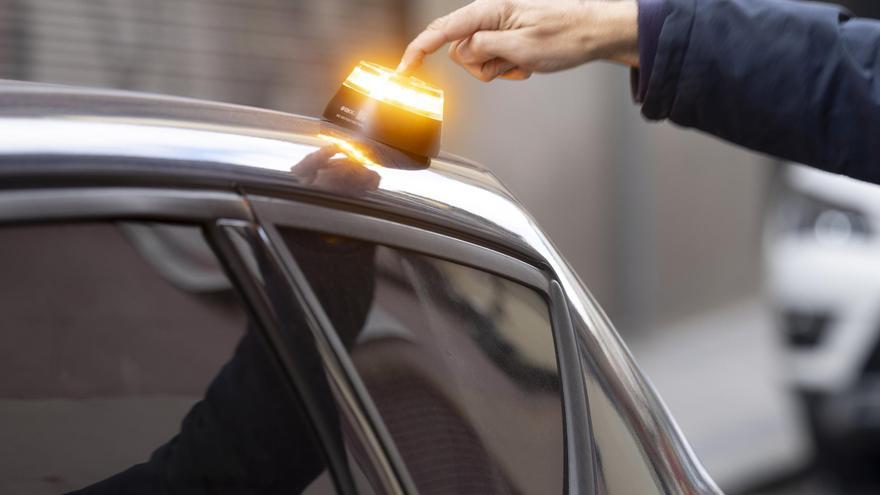
Spain Mandates V-16 Emergency Beacon From Today
Starting today, Spain's DGT mandates that most vehicles carry a new V-16 emergency beacon, a highly visible yellow light with an eSIM for anonymous emergency data transmission, replacing warning triangles to enhance road safety.
Starting today, all vehicles must carry a new V-16 emergency beacon, as required by the DGT (Spain's traffic authority). This small yellow light is designed to be highly visible. It can flash brightly in all directions for at least 30 minutes, either on and off or continuously. It comes with a battery that lasts at least 18 months, whether it's rechargeable or not.
The DGT introduced this rule to improve road safety. It aims to stop drivers from putting themselves and others in danger when they need to signal a broken-down vehicle.
Under the General Traffic Regulations, this new rule applies to cars, mixed-use vehicles, goods vehicles weighing up to 3,500 kg, and buses.
Motorcycles, however, are not required to carry emergency triangles. RACE (a motoring club) explains this is because motorcycles don't have enough space for them.
The Spanish Data Protection Agency (AEPD) confirms that the beacon's identifier is not linked to any person or license plate. There's no record connecting the device to its owner. You don't need to provide personal details when buying one, so the DGT doesn't know who owns which device.
This new mandatory beacon includes an eSIM card with mobile data, typically lasting 10 to 15 years. It doesn't send any data unless it's activated in an emergency. Even then, the information transmitted won't reveal who is driving or track their movements.
From today, not having a V-16 emergency beacon in your vehicle can lead to an 80-euro fine. If your vehicle breaks down and isn't properly signaled, the fine increases to 200 euros. The beacon must also be kept in an easily reachable spot for the driver, like the glove compartment or a door pocket, for quick access during an emergency.
Traffic officers will initially be lenient. They will also run campaigns to inform and remind drivers across Spain, including the Canary Islands, about the importance of carrying this new emergency signaling device in all cars.
Authorities confirm that only beacons that have been certified and meet general vehicle regulations are valid. These approved devices must have a mark showing the name of the testing laboratory and a serial number.