
Spain Mandates Connected V16 Beacons for Road Safety from 2026
Spain will mandate the connected V16 beacon from January 1, 2026, replacing traditional emergency triangles to automatically transmit vehicle locations to traffic control for enhanced road safety and management.
Spain's road network is getting a major update to how drivers signal emergencies. From January 1, 2026, a new device called the V16 beacon will become mandatory for alerting others about road incidents. This marks a significant step towards making roadside assistance more digital. The main goal of this change is to improve driver safety and help traffic management services respond more efficiently.
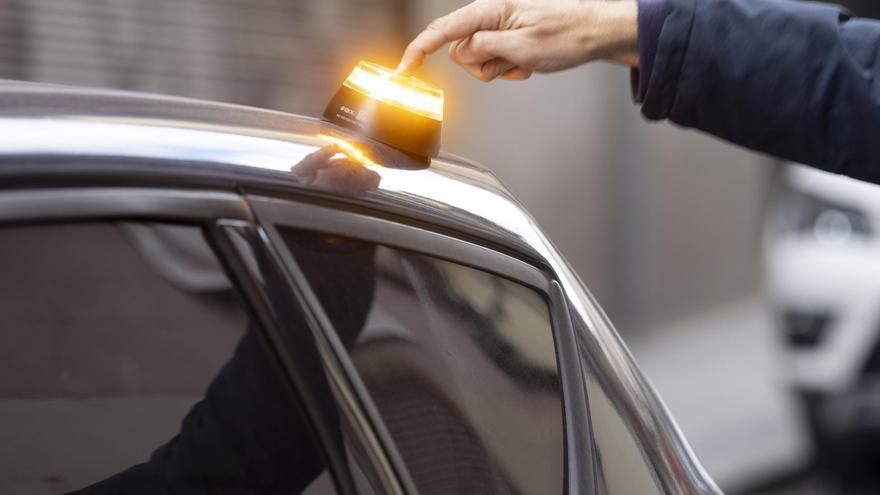
This new V16 device will replace traditional emergency triangles, and all drivers must carry one. It's designed for quick access, so it's recommended to keep it in places like the glove compartment or a side pocket. This makes it easy to quickly place it on the highest part of your car if you have a breakdown or accident.
The V16 beacon's main innovation is its connectivity. Models linked to the DGT 3.0 platform are designed to automatically send your vehicle's location to traffic control centers. This information is then displayed on DGT information panels and its official traffic map, providing real-time data on things like road closures, accidents, detours due to roadworks, bad weather, and stopped vehicles. On this map, beacons appear as a danger icon. If you select one, you can see details such as the road, direction of travel, province, municipality, and the exact time it was activated.
To ensure the system works properly, the DGT has set a window of about 100 seconds from when the beacon is activated until its location signal is registered in the traffic cloud. If the device is turned off before this time, the signal won't be recorded. This brief delay also allows users to check if the emergency light is working. However, misusing the beacon and unnecessarily calling out emergency services can lead to fines ranging from 1,500 to 30,000 euros, in addition to other legal consequences.
Regarding its technical features, the DGT describes the V16 as a compact, yellow emergency light with connectivity. It can emit a high-intensity light in 360 degrees, flashing intermittently and shining continuously for at least 30 minutes. It includes a battery or power source with a minimum lifespan of 18 months, whether it's rechargeable or not.
To ensure the devices are valid, the DGT provides a list of approved models on its official website. Drivers are advised to check that their chosen beacon appears on this list and is specifically connected to DGT 3.0; otherwise, the device will not be considered valid.
Besides the official DGT map, other platforms also show the exact location of these pre-signaling devices across mainland Spain, the Canary Islands, and the Balearic Islands. These maps, designed for beacon visualization, allow users to click an icon to see detailed information such as the road, kilometer point, direction, and the precise moment the device connected. They also provide data on the region, province, and municipality, and even offer the option to share the location through navigation apps like Waze, Google Maps, or Apple Maps. These platforms distinguish between operational beacons (shown in yellow) and those that have been recently active (in a darker shade), constantly updating to provide accurate information on the status of beacons on Spanish roads.