
Southern Tenerife: Four Women Drive Community Change
Four women are spearheading diverse community initiatives in Southern Tenerife, leading to significant improvements in public health, urban renewal, and local services.
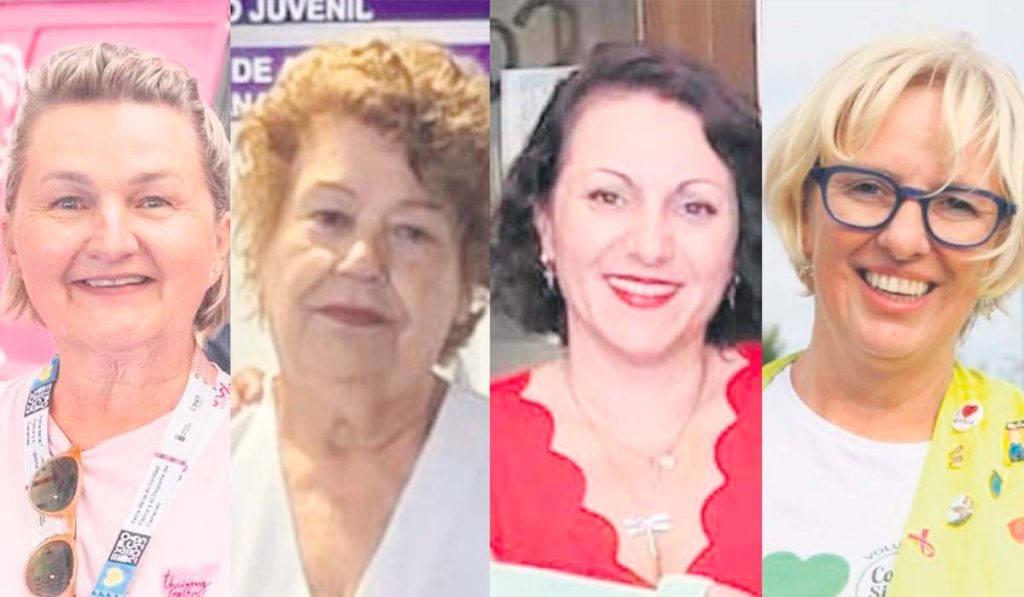
Southern Tenerife has become a hub for community action, where local involvement leads to real improvements. Four women – Brigitte Gypen, Vanesa Díaz, Bárbara Rodríguez, and Hannelore Ottevaere – stand out as examples of this commitment. They lead projects ranging from public health to urban renewal, showing how ordinary people can drive significant changes in an area with unique challenges.
Brigitte Gypen, originally from Belgium, heads the "Race for Life" foundation in the Canary Islands. This organization supports people with breast cancer and has built a nationally and internationally recognized support network. One of their most visible events is the annual "pink tide" march, which draws thousands of participants. The foundation has also launched the first scholarships for training breast cancer specialists and created the "Pink Room," a meeting place for patients and their families. Brigitte, who faced breast cancer herself over two decades ago, has been crucial to the community's continuous growth.
Vanesa Díaz, a psychologist living in Cabo Blanco, is the driving force behind the "We Are Not Second Class" citizen group. Her initiative was vital for bringing palliative care services to Southern Tenerife. Vanesa was motivated by her personal experience, as her father had to travel over 70 kilometers to receive palliative medication. She mobilized local residents and, after numerous meetings with various government bodies, successfully established this service at the Hospital del Sur and for home care. Her case has been presented as a model at national palliative care conferences.
Bárbara Rodríguez, from Charco del Pino, is a prominent figure in the south island's neighborhood movement. Thirty years ago, she co-founded the "Platform for a Public Hospital in Southern Tenerife" with Jordi Esplugas, Segundo Marco, and Emilio Lentini. This group, one of the oldest and most active in the Canary Islands and Spain, has been instrumental in monitoring the El Mojón hospital, overseeing its services, and demanding that deadlines are met. Recently, their pressure on the Canary Islands Government led the Ministry of Health to confirm plans for expanding an annex building, after a two-year delay. Bárbara has been honored with the Island's Gold Medal for her dedication.
Finally, Hannelore Ottevaere, a Belgian citizen residing in Costa del Silencio, has created a unique neighborhood movement focused on improving her community. Nearly three years ago, she and her daughter started by cleaning up trash and debris in Chayofita. This led to the formation of "Clean Costa del Silencio," an association of about fifty volunteers from twenty nationalities. They hold clean-up days twice a week, removing waste, pruning trees, repairing and painting walls, and fixing stairs and railings. Their achievements include restoring the island's first mini-golf course and transforming a neglected area into a free outdoor library. Her selfless work and example of integration have even been featured by the press in Minneapolis, United States.
These four women highlight the importance of female leadership and teamwork in building fairer communities with a higher quality of life. Their stories demonstrate how direct citizen involvement can create a profound and lasting impact on their communities.