
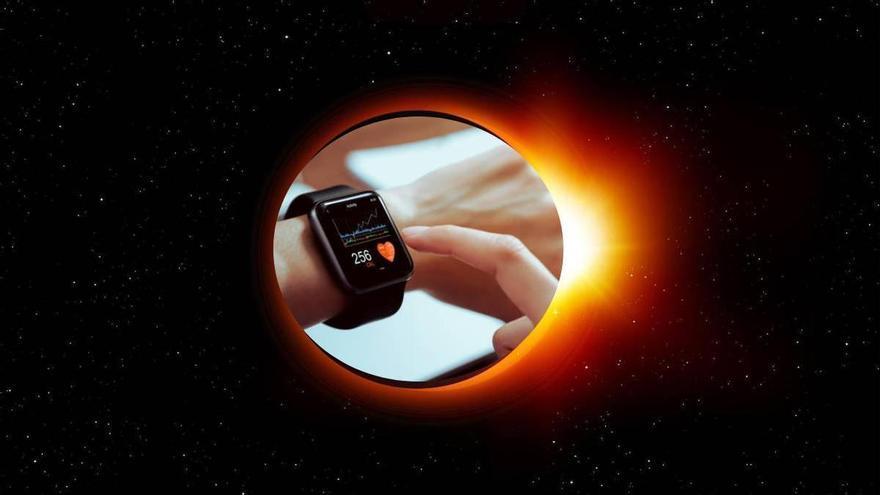
SOLARIS Project to Use Wearable Tech to Study Human Response to August 12 Solar Eclipse
The SOLARIS project is leveraging wearable technology to conduct a large-scale citizen science study on how the human body physiologically responds to the August 12 solar eclipse.
The solar eclipse on August 12 is set to become a massive citizen science experiment. The SOLARIS project—a collaboration between the Catalan government, the Vall d’Hebron Research Institute (VHIR), and the Institute for Space Studies of Catalonia (IEEC)—is using the event to study how the human body reacts to such a rare astronomical phenomenon.
The study uses wearable technology to track participants who registered in advance. Volunteers have been asked to sync their smartwatches or fitness trackers with the project’s official app. Researchers will monitor data over a five-day period: the two days before the eclipse, the day of the event, and the two days following it. This timeline allows scientists to establish a baseline and identify any changes in heart rate or breathing caused by the emotional or environmental impact of the eclipse.
To keep the data accurate, volunteers are asked to avoid intense physical exercise during the study. The tech firm OneCareAI is managing the data, ensuring all biometric information remains anonymous in line with the app’s privacy policies.
The study isn't looking for biological risks; instead, it aims to see if the combination of fading light, dropping temperatures, and the collective excitement of the event leaves a measurable mark on the body. This project highlights a growing trend of using everyday consumer devices to conduct large-scale medical research that would be impossible through traditional clinical trials.
While the science is exciting, health and space experts emphasize that safety remains the top priority. In areas like the Canary Islands, where the eclipse will be partially visible, it is essential to use solar filters that meet the ISO 12312-2 standard. Experts warn that regular sunglasses or standard optical equipment do not provide enough protection, and looking at the sun without proper filters can cause permanent eye damage.
Ultimately, SOLARIS offers a unique dual perspective: while the world looks up to the sky, technology will be watching how our bodies respond to the wonders of the cosmos.