
Skilled Worker Shortages Hamper Tenerife Business Growth
Despite moderate business confidence, Tenerife and the Canary Islands are grappling with a structural problem of escalating worker shortages, now affecting nearly half of all businesses and identified as the primary impediment to growth.
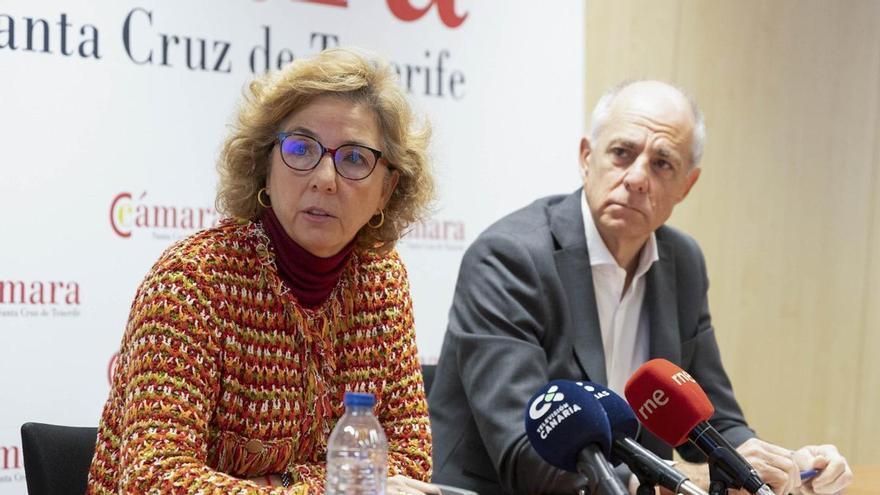
Worker shortages have jumped by 36% in the last five years. On January 1, 2021, 8% of businesses reported shortages, but this year on the same date, that figure hit 44%. For the second year in a row, a lack of skilled workers is the biggest problem holding back business growth in Tenerife. This was announced by Santiago Sesé, president, and Lola Pérez, general director, of the provincial Chamber of Commerce when they presented the Business Confidence Indicator (ICE) for early 2026. This staff shortage, combined with a rise in people not showing up for work (absenteeism) since the pandemic – which now ranges from 7% to 14% – are the top worries for business owners in Tenerife and the Canary Islands.
Business confidence on Tenerife is a bit higher (0.6%) than the average for the Canary Islands (0.4%) and also slightly above the national average (0.1%). Lola Pérez described this as "moderate growth, lower than in previous years." In January 2023, Tenerife's confidence level reached 4.6%, its highest in four years. The island is now settling into a more stable period after a time of very strong growth.
Pérez and Sesé believe these figures reflect the stable economy on the island, following several years of strong growth in business confidence. This stability helps explain why Gran Canaria's index is lower at 2.4%, and why La Gomera is booming with an ICE of 12.9% this year, which they connect to new hotel developments on that island.
In late 2025, La Gomera also topped the Canary Islands in a survey of business sentiment (the difference between positive and negative responses), scoring 35.9%. Lanzarote followed with 28.5%, then Gran Canaria (18%), Fuerteventura (17.7%), and Tenerife (15.6%).
While 44% of businesses in Tenerife report worker shortages, this figure rises to 52% across all companies in the Canary Islands, regardless of their size or industry. By sector, construction faces the biggest challenge with 67.3% reporting shortages. Transport is next at 59.7%, followed by industry (55.8%), retail (48.4%), and other services (38.6%). Overall, business activity is seeing moderate growth in most areas.
Increased competition is still a major concern for Tenerife businesses, cited by 48.6% (down slightly from 49.6% in 2024). However, it's losing some ground. Worker shortages and weak demand (both at 40.5%) are also key factors limiting business activity, according to the Chamber's representatives. They suggest that more competition points to increased business activity, while weak demand is partly due to ongoing inflation. Other issues like financial problems (17.9%) and lack of equipment (5.8%) are becoming less significant. The "other" category, which covers things like funding, remains steady at 26.1%.
Santiago Sesé expressed concern that this situation is becoming a long-term, "structural problem." He believes it's "necessary" to boost active employment policies, improve training and guidance programs, and regularly assess what businesses truly need. Essentially, he stressed the need "to match supply and demand," which "is not currently happening." There's a shortage of workers in traditional trades like bricklaying, air conditioning installation, electrical work, and metalwork, as well as in newer areas such as technology, digital services, and renewable energy. A key solution, he added, is to "retain the island's talent" that is currently leaving.
The Chamber's analysis suggests many people don't have the right training for available jobs. To address this, the Chamber supports fully developing Dual Vocational Training (FP Dual), which combines classroom learning with company internships, giving students a real chance to be hired afterwards.
On the topic of absenteeism, Sesé was careful not to blame workers, stating that "the vast majority fulfill their work and support businesses." He highlighted the importance of distinguishing between absences without a valid reason and those due to temporary illness or disability. He also pointed to strain on the healthcare system, with long waiting lists and delayed medical tests preventing workers from returning to their jobs, which causes issues for both companies and the individuals involved.
Santiago Sesé also brought up Tenerife's most worrying long-term problem: the lack of affordable housing. He connected the shortage of skilled workers, difficulties in finding affordable housing, and the growing complexity of job roles as a damaging combination affecting how businesses operate in Tenerife and the Canary Islands. This is happening despite efforts to increase salaries by 7% to 9%.
Looking at employment, 80% of companies expect to keep their current staff levels in early 2026. However, Pérez noted that the number of businesses planning to hire versus those planning to cut jobs "is starting to show negative values, suggesting growth is slowing down."
Private investment is also being held back. This isn't because of a lack of projects or ideas, but rather due to "legal uncertainty and slow administrative processes." In their view, this slows down economic growth and diversification, and leads to lost investments that could create jobs and improve society.
Adding to these challenges is uncertainty around public funding. The national budget has been extended for three years, and a proposed regional funding plan, according to the Chamber of Commerce, puts the region at a disadvantage and lacks agreement.
In summary, the overall trend shows fewer strongly positive responses and more indicating stability, especially after the busy commercial season and as the hospitality sector's results have leveled off. This period of stability, they say, presents many opportunities that must be taken advantage of to avoid "a slowdown in development and a good economic tone."