
Sisters Reclaim Family Home After Four-Year Squatter Battle
Sisters Elena and Aurora Castro have successfully reclaimed their family home in El Toscal after a four-year legal battle against squatters who had occupied the property since 2021.
Elena and Aurora Castro have finally gotten their family home back after a four-year battle against squatters. The sisters own a house at 46 San Francisco Javier Street in the El Toscal neighborhood. In September 2021, they found a man living there who claimed he had been there for 30 years. That's when their fight to reclaim their property began.
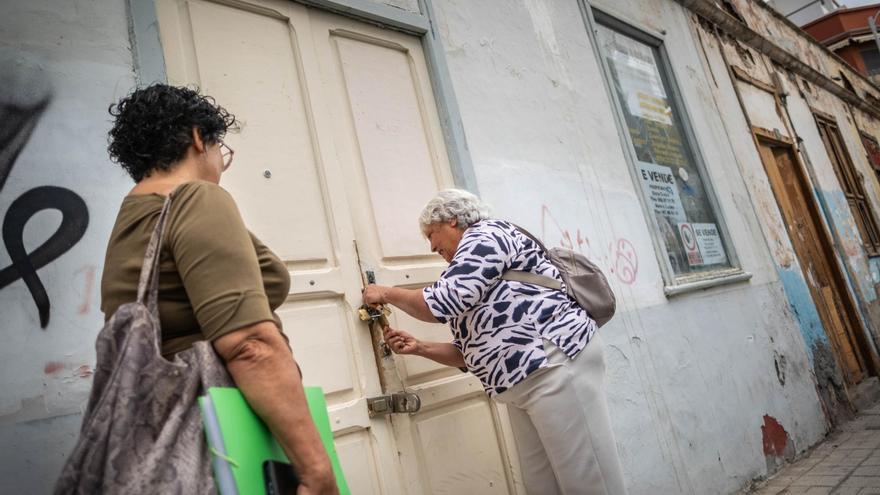
It took them three years to file a criminal complaint, even after three civil complaints. Finally, on November 3rd, after months of waiting, the trial happened. The court's decision allowed them to get their house back. Elena explained that the squatter reluctantly handed over the keys to the padlocks, making even that moment difficult.
The sisters say the house is "completely different." The walls, once gray, are now blue, and some look freshly painted. In the bathroom, there was a hole the squatters used to get in and out. This hole was covered up by the time the sisters got the house back. When they went inside on the day of the trial, they noticed the cement covering the hole was still wet. The sisters suspect the squatters might have tried to make other holes in the house, noting that "if you tap the walls, some sound hollow."
The sisters' problems with squatters began in 2021. They learned that a Special Protection Plan for El Toscal was about to be approved. This plan would allow the Santa Cruz City Council to let them sell or renovate their property. However, the plan's final approval was delayed until 2023.
El Toscal, a historic area in Santa Cruz, has been stuck in a planning freeze since the 1990s. This stopped any renovations and left many homes run-down and empty. The sisters believe this situation attracts squatters, who "take advantage of owners not being able to do repairs or sell."
In early 2021, the sisters contacted a real estate agent to view their house and consider selling it. When they arrived, they found the squatter inside. They asked him to leave, but he refused. In November of that year, they returned and found him still there. They also noticed a hole in the bathroom, covered with black fabric, which other people were using to get out. As they spoke to him, he tried to shut the door on them. "We ran away," they recall. "We don't want to imagine what would have happened."
From that point, a long and difficult administrative process began. They spoke with lawyers, heritage experts, and land registry technicians – who took years to sort out a 17-meter discrepancy caused by a neighbor. They also dealt with officials who, they say, treated them "with contempt." One lawyer even told them that evicting the squatter would be "more expensive than selling the house."
In March 2023, they filed their first complaint with the National Police. However, the police wouldn't even accept their property ownership documents. "He was given a public defender and a solicitor; we got nothing," Elena pointed out. During this time, the squatters built a wall without permission, and the sisters started facing verbal abuse from men whenever they went near the neighborhood.
In 2024, a new lawyer filed a civil lawsuit. When the sisters asked about the trial date, they were told the notification had been "misplaced." Eventually, the trial took place. The squatter's defense gave conflicting stories: that someone else gave him permission, that he had lived there for years, or that the sisters hadn't legally inherited the property. "We have all the papers in order," Aurora confirmed.
The judge dismissed that lawsuit, saying the time limit for filing had passed. However, the sisters remembered that "the High Court of Justice states that squatting crimes don't expire as long as they are still happening."
In March of this year, they filed another lawsuit, this time a criminal one. On November 3rd, the trial that finally allowed them to get their home back took place. Even though they won, they still feel afraid. "For four years, we looked out the window and crossed the street carefully, worried they might find out where we live or harm us," they explained. Now, they feel "a little calmer," but remain cautious.