
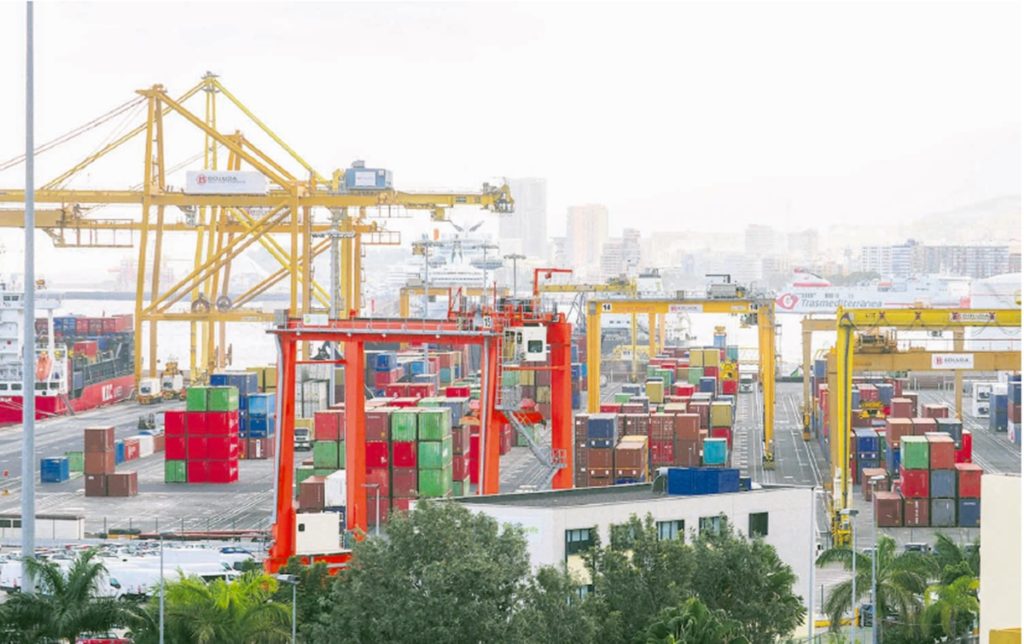
Sertego Proposes New Industrial Waste Treatment Facility at Port of Santa Cruz de Tenerife
Sertego Servicios Ambientales has proposed building a new waste treatment facility at the port of Santa Cruz de Tenerife to process up to 45,000 tons of hazardous and non-hazardous waste annually.
Industrial waste management in the Canary Islands could soon change, following a proposal by Sertego Servicios Ambientales—a subsidiary of Urbaser—to build a new treatment facility at the North Dock of the port of Santa Cruz de Tenerife.
According to plans currently open for public review, the company intends to develop a 5,242-square-meter site to centralize waste processing. Currently, much of this waste must be shipped off the island because local facilities lack the necessary technology to handle it.
The project is now in a 30-day public comment period. The proposed facility would manage everything from the initial collection and storage of waste to its physical and mechanical treatment. It is designed to handle both hospital waste—including chemical, cytotoxic, and biosanitary materials—and maritime waste regulated by the international Marpol Convention, such as hydrocarbons and wastewater. Technical estimates suggest the plant could process up to 15,000 tons of hazardous waste and nearly 30,000 tons of non-hazardous waste annually, pending final environmental authorization.
This move is part of a broader effort to align port operations with circular economy principles and updated waste regulations. Sertego already manages waste transfer centers in El Rosario, Lanzarote, and Gran Canaria, and this project would expand its presence in Tenerife.
To address potential community concerns, the proposal includes a risk analysis and an odor dispersion study. Technical reports indicate that even in nearby areas like Cueva Bermeja, San Andrés, María Jiménez, and Cuchillo del Saltadero, emissions would remain well within legal limits. The study concludes that the facility would not cause significant odor issues for the surrounding neighborhoods, a finding that will be a central focus during the ongoing environmental assessment.