
Security and Transport Plans Revealed for Pope Leo XIV’s Upcoming Spain Visit
Spanish authorities have unveiled a sophisticated, multi-vehicle transport and security plan for Pope Leo XIV’s upcoming visit, marking a significant evolution from the improvised solutions used during the first papal tour in 1982.
Details regarding the security and transport plans for Pope Leo XIV’s upcoming visit to Spain have been released, highlighting a strategy that balances operational efficiency with the need for the public to see the Pontiff. The transport plan is tailored to the specific geography and capacity of each host city: Madrid, Barcelona, Gran Canaria, Tenerife, and La Laguna.
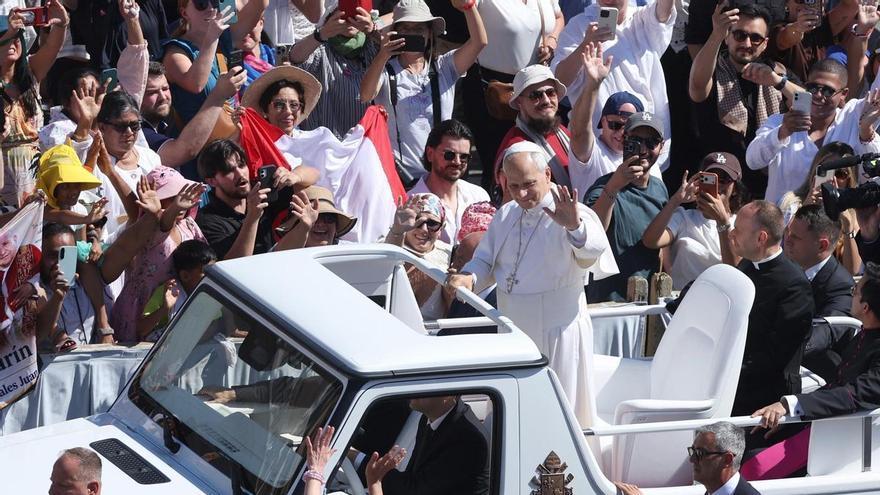
The fleet includes a Mercedes G-Class 500, specially outfitted for large events, which will be used in Madrid before being moved to the Canary Islands. For stops in Barcelona and Tenerife, organizers have chosen the versatile Isuzu D-Max. In areas requiring more agility, such as La Laguna, the Pope will travel in one of three leather-trimmed electric buggies. This variety of vehicles is part of a security strategy designed to protect the leader of the Catholic Church while ensuring he remains visible to the faithful—a standard Vatican requirement that dictates how vehicles are modified based on the setting and risk level.
This organized approach is a far cry from the improvisation seen during the first papal visit to Spain in 1982. Back then, the official vehicle was too large to fit inside the Santiago Bernabéu and Camp Nou stadiums, forcing officials to find an emergency solution. In just two weeks, a Seat Panda was converted at the Zona Franca plant into an open-platform vehicle.
That makeshift car, now a famous piece of Spanish automotive history, allowed John Paul II to travel through the stadiums without armor, but with great symbolic significance. Unlike the sophisticated, high-security fleet prepared for Leo XIV, that adapted Panda lacked the modern safety features now standard for papal travel. The shift from that artisanal vehicle to today’s high-end fleet reflects both the evolution of safety standards and the professionalization of how large-scale institutional events are managed.