
Scout Explains Tenerife Talent Exodus to Las Palmas
Tenerife scout Rubén García explains why talented young players from the island are increasingly joining UD Las Palmas, attributing it to the club's strong commitment to its youth academy and clear pathway to professional football.
For some time now, youth football in Tenerife has been facing a noticeable trend: more and more talented young players from the island are leaving to join Unión Deportiva Las Palmas. Famous examples like Pedri, Kirian Rodríguez, and Alberto Moleiro have sparked an ongoing, sometimes awkward, discussion about youth academies, real opportunities, and club strategies.
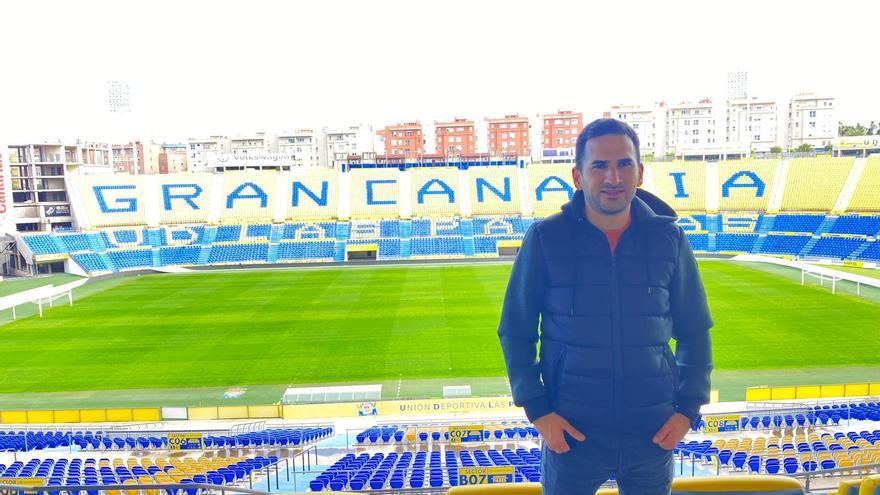
To understand this movement, it's worth looking at a key figure who isn't widely known to the public: the scout. In Tenerife, Rubén García, from La Orotava and part of UD Las Palmas' scouting department, is one of the most important names in this field.
Rubén knows Tenerife football extremely well, having been involved for years. Before becoming a scout, he spent years coaching young players, moving through all levels of youth football and spending a decade in the Tercera División with Santa Úrsula, as well as leading Orotava. He speaks from direct experience about the island's talent, the complexities of football in the Canary Islands, and why Las Palmas has become such an attractive destination for so many young footballers from Tenerife.
"The evidence is clear for everyone to see," he admits when the topic of players moving to Gran Canaria comes up. From there, he offers a detailed analysis, based on his experiences and a strong defence of the youth academy model that has, in his words, made Las Palmas "a national leader."
García's impressive work at Santa Úrsula led him to join Las Palmas. He remembers that Las Palmas was "always watching" everything they did. His project made the northern club a model for its strategy, with a team that once had 18 players under 23 in the Tercera División. "We were as good as the reserve teams of Tenerife and Las Palmas, focusing on youth development and, in a single season, giving 16 or 17 academy players their first game," he explains. That model, he admits, "was liked" by Unión Deportiva. So much so that they not only praised their work but also, two years ago, asked him and his brother Jonás to join their scouting team in Tenerife.
Today, as a scout for the northern zone – though he can also scout "beyond the island," as he clarifies – Rubén García is one of the best people to explain how talent is spotted, how the decision to sign a player is made, and why so many young people from Tenerife see Las Palmas as a real path to professional football.
Alongside him, his brother Jonás, and Emilio – who covers the southern zone – complete Las Palmas' scouting team in Tenerife. This watchful team of three operates in a region that, in Rubén's opinion, continues to be a place full of talented players. "Tenerife football has a lot of talent, very interesting, very capable footballers who can make it," he asserts. And while he doesn't ignore the limitations – "there are only two professional clubs," he admits – he strongly disagrees that the problem is a lack of quality. "I don't think we lack technical or tactical skill," he states.
Regarding the famous exodus, for Rubén, it's not just a feeling, it's a fact. "Many more players from the Canary Islands make their debut at Las Palmas than at Tenerife," he maintains. And he points to the main reason: "The club's commitment." Because, in his opinion, Las Palmas doesn't just talk about it. It has "a serious and genuine commitment to its youth academy," a commitment reflected in concrete facts: reserve teams "filled with promising players," and plans to ensure these young players "get a chance in the first team." And, in football, he insists, that's what truly "offers assurance."
He uses Alberto Moleiro as an example. Rubén believes that the winger from Santa Cruz shows this real possibility better than anyone. "If Moleiro, who was here, had the chance to become a professional footballer after being scouted in Tenerife and given the opportunity to develop in Las Palmas' youth academy... and he succeeded. This makes it seem achievable for other Canarian players," he explains. The same goes for Pedri. For him, the value isn't just about talent, but about seeing that the path to professional football exists and can be taken from the Canary Islands. "When you see the case of Pedri, who is, in the end, just like any of us, from Tegueste, a town we all know... you see someone relatable, a Canarian, with attitudes and behaviours that represent us, that make us feel connected, and you see him succeeding in professional football... well, I think that's a source of pride for everyone, and that's where the real value lies. Footballers in the Canary Islands identify with that, with the idea that anyone can be a Moleiro," he adds.
However, Rubén isn't naive. In fact, he speaks powerfully about what people don't see – what makes some succeed and others not. For him, it's not always "those with the best skills" who succeed. Often, it's "those who keep trying," the "most consistent" ones. And there he offers almost a life lesson. He speaks of endurance, resilience, working quietly, and not giving up when chances don't appear. He believes the biggest mistake in youth football is: "Not pushing hard enough and not fighting for what you want to achieve."
When asked if young players from Tenerife end up choosing Las Palmas over Tenerife, Rubén avoids conflict. "We don't try to poach players from Tenerife," he clarifies. He speaks of "our own standards" and a very specific way of understanding football, the "club's philosophy." And that project, he insists, is clearly explained. The key, he concludes, is that the player "leaves convinced by what the club is doing and how it operates."