
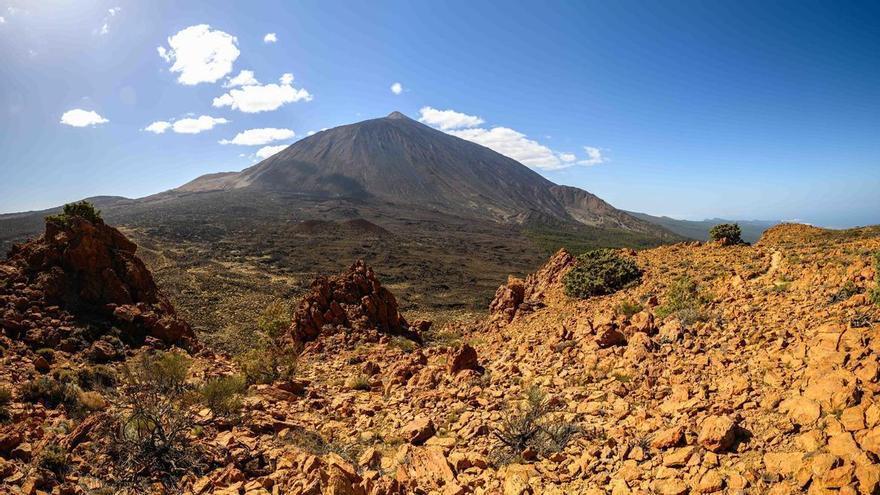
Scientists Increase Monitoring as Seismic Activity Rises Near Tenerife’s Mount Teide
Scientists have increased seismic monitoring near Tenerife’s Teide National Park following a rise in earthquake swarms, though experts emphasize there is currently no immediate threat of an eruption.
Increased seismic activity near Teide National Park has prompted scientists to step up their monitoring efforts. According to the National Geographic Institute (IGN) and the advisory committee for the volcanic emergency plan (Pevolca), Tenerife has seen a significant rise in earthquake activity this year.
Ithaiza Domínguez, director of the IGN in the Canary Islands, reported that there have been ten "seismic swarms" so far in 2026, compared to the usual six recorded in previous years. The data shows a fluctuating pattern: activity peaked between February and March, slowed down during the spring, and then picked up again in June and July with three new episodes.
In response, Pevolca has scheduled quarterly meetings to ensure constant, rigorous oversight. Geologists note that while these tremors are a natural part of the island’s volcanic landscape, there is currently no evidence of magma moving toward the surface—a necessary precursor to an eruption. Therefore, experts say there is no immediate threat. However, they remain cautious, warning that these swarms could continue and may even lead to earthquakes strong enough for residents to feel, though these are not expected to cause structural damage.
While the memory of the 2021 Tajogaite eruption on La Palma understandably makes the public uneasy, officials are focused on preparation rather than alarm. Surveillance of Teide remains a priority, with scientists emphasizing that volcanic activity is complex and unpredictable, requiring ongoing attention rather than short-term forecasts.