
Santiago del Teide Preserves Rural Heritage as Cultural Resistance Against Mass Tourism
The annual recreation of a historic mountain pass in Santiago del Teide serves as a vital act of cultural preservation, uniting long-term residents and newcomers to honor the region's rural heritage amidst modern tourism.
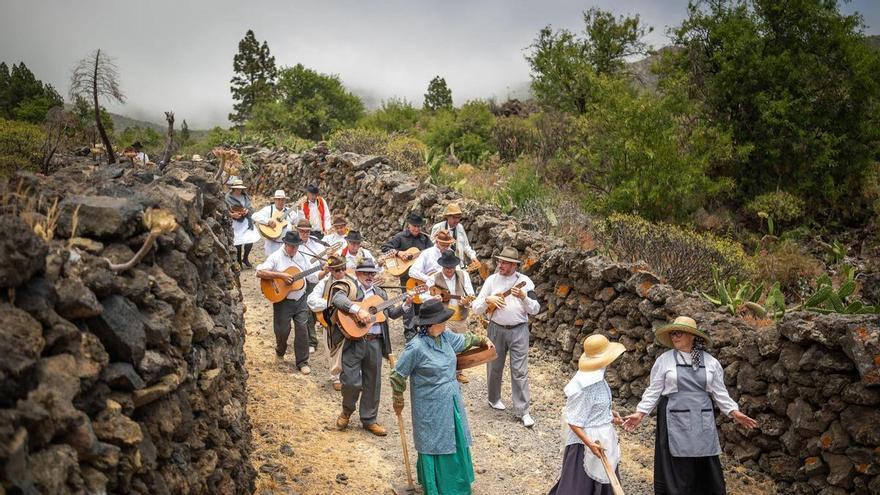
In Santiago del Teide, the preservation of local history has become a form of cultural resistance against the rise of standardized tourism. Last Sunday’s recreation of the historic "mountain pass" and traditional agricultural barter proved that these events are more than just folklore; they are tools for social unity that help a diverse modern population understand the rural life of the early 20th century.
Started 20 years ago by Juan Antonio Jorge Peraza with support from the Tenerife Rural Foundation, the event follows a route connecting San Francisco de La Montañeta, San José de Los Llanos, and the center of Santiago del Teide. It is particularly notable for bringing generations together. Since 2017, the local Folk Dance Workshop has even included European residents who have moved to the island, using tradition as a way to build a stronger, more integrated community.
This year’s event highlighted the contrast between modern life and historical legacy, as the recreation took place alongside a high-profile gastronomic event at the Casona del Patio. While digital and television entertainment captured some of the town’s attention, the old royal road became a space for living history. Elderly participants like Mary Carmen Luis shared firsthand accounts of a time when bartering goods—from saffron to local crops—was a daily necessity. Meanwhile, others took on roles like the landowner or the local priest to reconstruct the social hierarchy of the past.
Despite missing a few traditional figures, such as the old pig herders and the village doctor, the event successfully focused on the spirit of the exchange. Supported by groups like the Arona Municipal School of Folklore and the Friends of Traditions of San Juan de la Rambla, the day concluded with a feast led by Mayor Emilio Navarro. The event proved that this intangible heritage is not disappearing; instead, it is adapting to the region's changing demographics, ensuring that the community remains connected to its roots despite the pressures of economic change.