
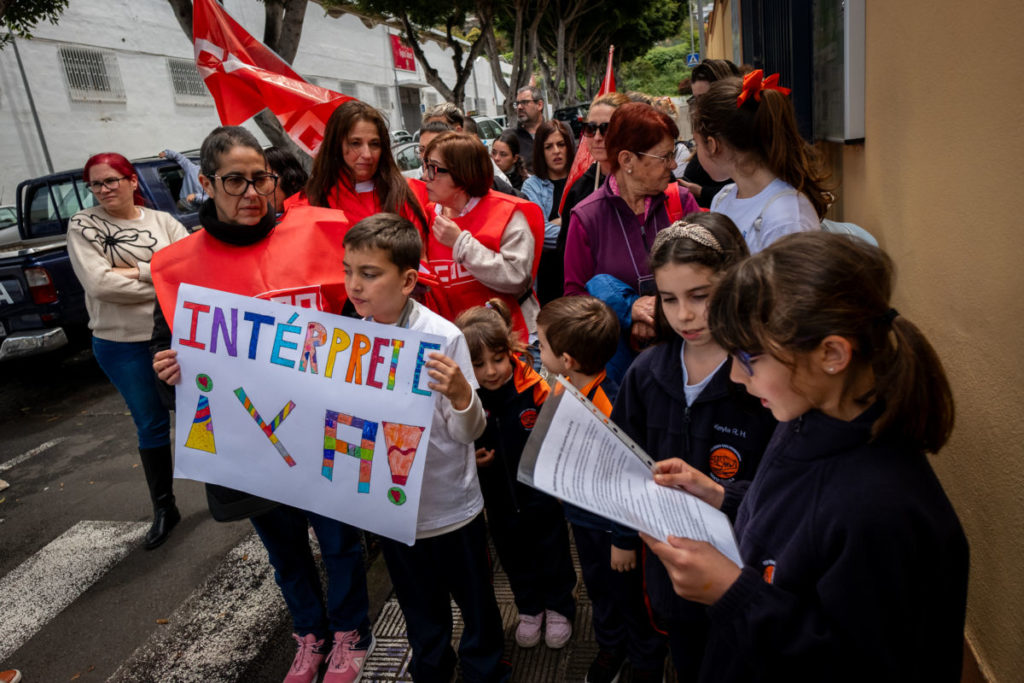
Santa Úrsula School Community Protests Lack of Interpreter for Hearing-Impaired Teacher
The school community at CEIP San Fernando is protesting a bureaucratic failure that has left a hearing-impaired teacher without a required sign language interpreter, sparking a broader debate over educational inclusion and labor rights in the Canary Islands.
The school community at CEIP San Fernando in Santa Úrsula is speaking out against a bureaucratic failure that is preventing Lidia Domínguez, a teacher with a hearing impairment, from accessing a sign language interpreter. This essential support is currently unavailable, making it difficult for her to carry out her professional duties.
This situation has sparked a wider debate about the effectiveness of inclusion policies in the Canary Islands. While the regional Department of Education claims that the position remains vacant due to issues with the selection process and a lack of interested candidates, the union Comisiones Obreras disagrees. The union has questioned the transparency of the process, noting that qualified professionals have been turned away. They now intend to file a formal complaint with the Canary Islands Employment Service.
During a recent protest, families, teachers, and union representatives gathered to highlight that a sign language interpreter is not merely a companion, but a vital facilitator for classroom equity. A student from class 3A spoke at the event, emphasizing that educational quality must be a practical reality that allows teachers to work without communication barriers.
This case underscores the challenges of upholding the Law on Educational Inclusion, which requires the government to provide the necessary resources for teachers with disabilities to work on equal terms. The presence of an interpreter from the organization Afamca at the rally served as a clear reminder of this need. How this conflict is resolved will not only impact the students in Santa Úrsula but will also set an important precedent for how the regional government handles labor rights and accessibility in public schools.