
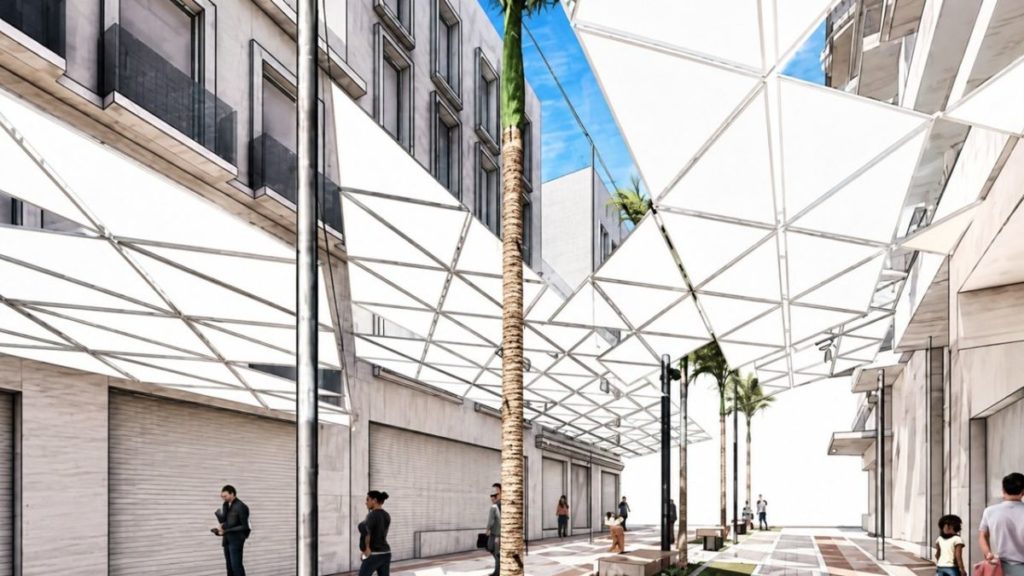
Santa Cruz to Transform Calle Castillo into Climate Refuge by 2028
Santa Cruz de Tenerife has launched an urban planning project to transform Calle Castillo into a climate-resilient space featuring new paving and greenery, with completion expected by 2028.
Calle Castillo in Santa Cruz de Tenerife is set to become a "climate refuge" to help combat rising temperatures, but the project won't be completed until the summer of 2028. According to Diario de Avisos, the City Council has begun the administrative process after receiving approval from the Cabildo’s Historical Heritage department to extend the project across the entire street, from Plaza Weyler to Plaza de La Candelaria.
The project is currently in its early stages. The council has hired architect Javier Martínez Amigó for 84,500 euros to draft the plans. Carlos Tarife, the Councilor for Public Services, stated that the contract will be finalized on September 20. From there, it will take five months to prepare preliminary reports and another five months to complete the final design, which is expected by July 2027.
The actual construction timeline depends on future political decisions. If the council opts for a public tender, the process will include an additional four months for bidding and six months for construction, pushing the completion date to 2028. The project has grown significantly in scope; what began as a plan for a small section of Calle Valentín Sanz now covers the entire commercial artery, requiring a new tender process.
Beyond installing overhead shades, the plan includes a major redesign of the street. The Public Services department is currently designing new paving and planning to add trees to help reduce the "urban heat island" effect. Councilor Tarife confirmed that once the paving design is ready, the city will consult with local merchants and residents to gather feedback before finalizing the plans.
This initiative is part of a wider trend across Spain, where cities are adapting historic centers to climate change by balancing heritage preservation with the need for cooler, more comfortable spaces for pedestrians. The City Council plans to fund the project through either existing framework contracts or a dedicated budget, ensuring this major urban upgrade remains a priority for the capital.