
Santa Cruz’s Los Hoteles Neighborhood: A Living Archive of Canary Islands Architecture
The Los Hoteles neighborhood in Santa Cruz de Tenerife, designated a Property of Cultural Interest, serves as a preserved architectural landmark showcasing the evolution of urban planning and diverse design styles from the late 19th century to the present.
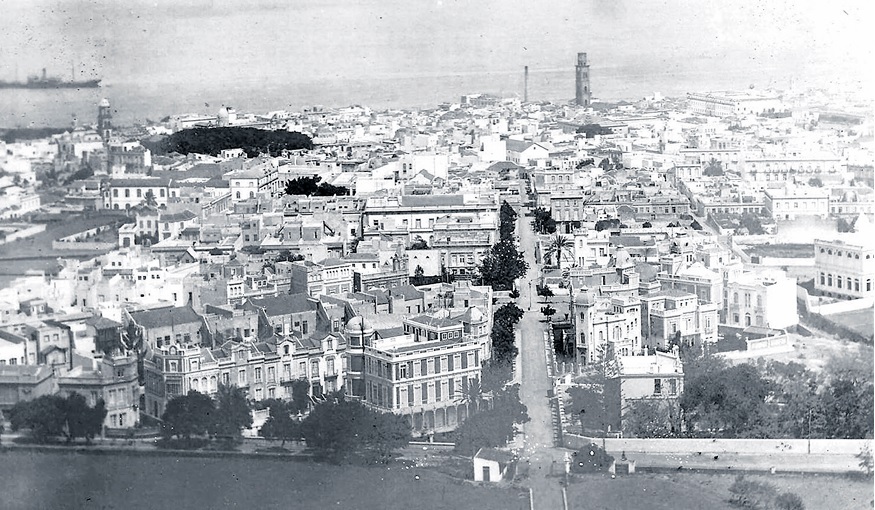
The Los Hoteles neighborhood in Santa Cruz de Tenerife is a key example of how urban planning has evolved in the Canary Islands. Originally developed in 1889 by the Society for Building and Urban Reform under Manuel de Cámara, the area has undergone significant regulatory changes to ensure its preservation. In 2014, its status as a Property of Cultural Interest (BIC) was expanded to better protect its diverse architectural legacy, which includes not only early eclectic and modernist designs but also significant examples of rationalist and regionalist styles.
The neighborhood’s importance is defined by its layout—centered around the 25 de Julio Avenue—and its high concentration of iconic buildings. A major turning point in local construction is seen in the Convent of the Servants of Mary, which transitioned from traditional stone to cement and plaster while keeping its classic courtyard design. Other notable landmarks include the Roma building, the Castelo pharmacy, the Bank of Spain, and City Hall, alongside private residences designed by renowned architects like Antonio Pintor, Domingo Pisaca, and Marrero Regalado.
The area features a wide variety of protected sites. Along the Rambla, you can find modernist works like Villa Petra, the Hodgson, Caulfield, and Guimerá houses, and the Institute of Hygiene, which shows the influence of the French Second Empire. Public infrastructure is also significant, including the 1928 Water Reservoir and the 1893 Bullring, a unique example of Neo-Mudéjar style adapted for the island. Furthermore, the Plaza Weyler area and the nearby military complex—comprising the Captaincy General, the Armory, and the former Artillery Park—form a historic administrative hub.
Preservation efforts focus on more than just maintaining facades; they also involve repurposing industrial and service buildings for modern use. Examples include the former La Belleza Tobacco Factory and the Los Lavaderos building, which now serves as a cultural center. With its mix of styles—ranging from the classicism of the Captaincy to the rationalism of the Defense Delegation—the neighborhood serves as a living record of Santa Cruz’s social and political history, shaped by the military and the bourgeoisie of the late 19th and early 20th centuries.