
Santa Cruz Returns €5.1M EU Funds for Unfinished Projects
Santa Cruz de Tenerife City Council returned 5.1 million euros in European funds for an abandoned bike lane and a disputed waste collection project, raising questions about the city's ability to execute EU-funded initiatives.
The Santa Cruz de Tenerife City Council recently had to return 5.1 million euros to Europe. This money was originally meant to help local taxpayers pay less, or nothing at all, for a new bike lane in the city center and better waste collection services.
Two main issues led to this situation: a lack of clear decisions from the local government and objections from the municipal Audit Office. These problems ultimately stopped the projects from being completed according to the European Union's rules.
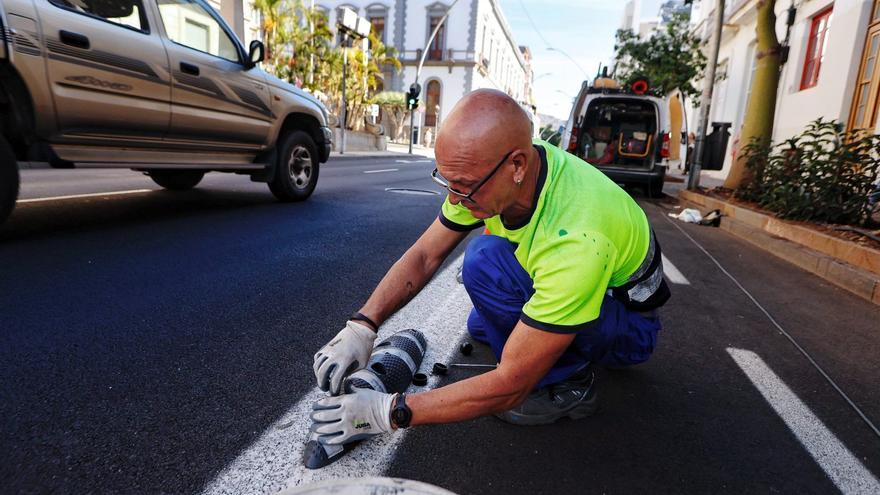
The bike lane project, in particular, proved costly. Santa Cruz spent about 1.5 million euros on building sections of the lane in areas like Méndez Núñez and La Marina. However, the project was later abandoned after residents from the City Center took the issue to court. The courts sided with the Urban-Zona Centro El Perenquén association, which had opposed the bike lane.
In short, the city spent 1.5 million euros on a bike lane that is now largely unused for cycling. On top of that, it had to return the European grant, plus interest, because the project wasn't completed by its deadline of December 31, 2024. Currently, the bike lane is often used by businesses for loading and unloading or as overnight parking. From Europe's perspective, the project wasn't finished as originally planned to get the funding.
A similar problem arose with 3.6 million euros intended for introducing a fifth container for organic waste, buying two electric trucks, and setting up two recycling centers. Carlos Tarife, the Councilor for Public Services, explained at a recent meeting that the City Council decided to return this European money. This decision came after the mayor refused to overrule the auditor's objection, who argued that European funds shouldn't pay for materials that the waste service company should cover.
As a result, Santa Cruz will now have to use its own money to buy the brown organic waste containers and fund other necessary actions to meet waste regulations. So far, the organic waste container has only been introduced in the Centro-Ifara and Salud-La Salle districts.
The difference from the bike lane situation is that, for the waste project, the City Council had already received half of the 3.6 million euros. This portion of the money won't be returned and will still be used for the organic waste container project. However, the remaining 1.9 million euros has been paid back. "You don't lose what you don't have," Tarife commented, acknowledging that what was meant to be paid for with European funds will now be entirely covered by the city's budget.
Carlos Tarife, who also oversees Strategic Development, highlighted his team's efforts in securing European funds for the city. He defended their overall record, noting that in the last three years, Santa Cruz has received 62 million euros, with only 3.2 million having been returned.
The Planning or Strategic Development department, established in April 2022, has successfully obtained about 50 million euros in European grants, mostly from Next Generation funds. Around 25 million of this has gone towards renovating housing and urban areas.
Key funding areas include the Low Emission Zone and Sustainable Mobility, which received 10 million euros. This has funded projects like work on La Rosa street, purchasing electric buses, installing charging points, and creating special lanes. Another 5 million euros for waste management has sped up the introduction of the brown organic waste container, a project that would have taken longer to complete with only local funds.
The Sustainable Tourism Plan also secured 5 million euros. This has funded initiatives such as the San Andrés Dike, sustainable infrastructure, digitalizing the tourism system (including a future interchange office and an immersive room at Palacio de Carta), and a self-guided Carnival route. Additionally, 7 million euros were obtained for digitalization and governance, focusing on modernizing the water system through Emmasa and new technologies for environmental sustainability.
While the municipal government views this overall financial performance as positive, these recent returns have reignited political debate. Questions are being raised about the city's planning, decision-making processes, and its actual ability to carry out the European projects it manages to secure.
Furthermore, the strategic development team points to another achievement: the Santa Cruz de Tenerife City Council is the only municipality in the Canary Islands to be listed among the top hundred recipients of Next Generation European funds by the Spanish Government to the European Commission.
The European funds received by Santa Cruz support various projects, including creating low emission zones, renovating buildings, improving cybersecurity, and installing thermal energy systems. This continues despite the need to return money for the bike lane (which was effectively paid for twice) and the setback with the waste service.