
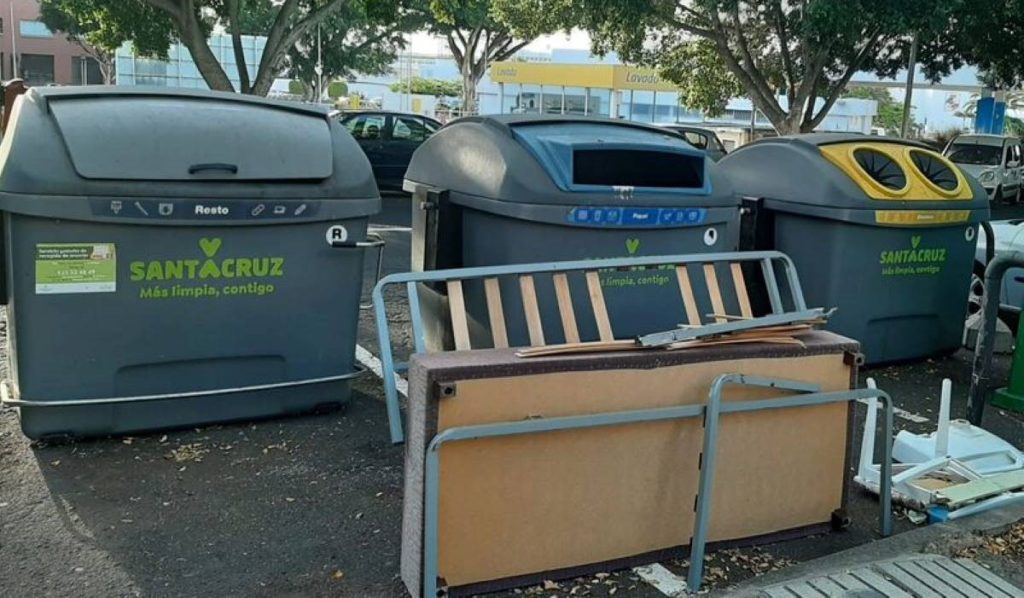
Santa Cruz de Tenerife Shifts to Appointment-Only Bulky Waste Collection to Curb Illegal Dumping
Santa Cruz de Tenerife is transitioning to a mandatory appointment-only system for bulky waste collection this Saturday to combat a surge in illegal dumping and improve street cleanliness.
Santa Cruz de Tenerife is changing how it handles bulky waste. Starting this Saturday, the City Council is ending the district-based collection model used for the past three years and moving to a new appointment-only system.
This shift comes as the city struggles with a surge in illegally dumped items. In the first seven months of 2026, residents left 1,759 tons of bulky waste on public streets—a 10.39% increase compared to the same period last year.
To keep the city cleaner and safer, the Council is stepping up enforcement. Residents are reminded that leaving furniture or appliances on the street without an appointment is against the rules. Depending on the severity of the offense, fines can range from 2,000 to 3,000 euros under local waste management ordinances.
How the new service works: The service remains free, but you must now book a pickup in advance. When you request a collection, you will need to provide your details and a list of the items. Once approved, you will receive a reference number and instructions via phone, SMS, or WhatsApp. You must place your items next to the designated containers only during your assigned time slot, which will be between 8:00 p.m. and 11:00 p.m.
Important guidelines:
- Limits: Each request is limited to a maximum of six items and a total volume of less than three cubic meters.
- Exclusions: The service does not collect construction debris, bathroom fixtures from renovations, or refrigerators containing ozone-depleting gases.
By moving to this system, the City Council aims to streamline collection routes—which will generally begin at 7:00 a.m.—and reduce the amount of time waste sits on the sidewalk, helping to improve public health and keep the city’s streets clear.