
Santa Cruz de Tenerife Highlights Economic Growth and Infrastructure Investment in Progress Report
Santa Cruz de Tenerife’s governing coalition reports strong economic growth and record infrastructure investment, though the city continues to navigate the long-term challenge of finalizing a new urban development plan.
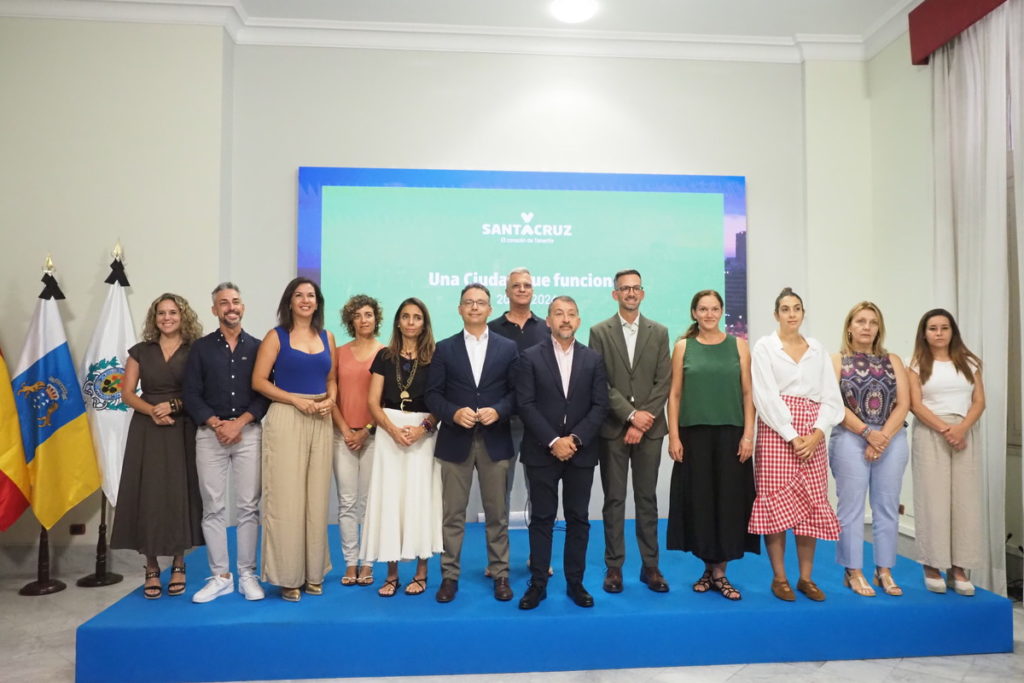
Santa Cruz de Tenerife’s governing coalition—made up of the Canary Coalition and the People’s Party—has released a progress report highlighting public investment as the key to the city’s stability. Following an accountability event, Mayor José Manuel Bermúdez stated that the administration’s focus on financial health has kept the city moving forward, avoiding the administrative gridlock seen in other municipalities.
Economically, the city is performing better than it has since 2008. Unemployment has dropped to 15,932, and there are now over 7,000 registered businesses supported by a workforce of 151,140 people. First Deputy Mayor Carlos Tarife noted that this growth is being bolstered by a strong focus on culture and large-scale events to raise the city’s profile.
Infrastructure remains the administration's top priority. Backed by a record budget of 381 million euros, the City Council has completed over 30 urban improvement projects, with 14 more currently underway at a cost of 51 million euros. The "Urban Impulse" program is central to this effort, with 130 million euros earmarked to renovate public spaces through 2030. In terms of housing and social support, the city has delivered 283 new public homes, renovated 1,500 existing ones, and invested 32.7 million euros into programs for vulnerable residents.
Despite these gains, urban planning remains a challenge. The city has been without a General Urban Development Plan (PGO) since it was annulled by the courts in 2017. While the government aims to approve a new plan by 2027, they are currently relying on specific adjustments to move key projects forward, such as commercial expansions and the development of the Las Teresitas area.
As the administration looks toward the second half of the decade, it faces the task of maintaining this momentum. Success will depend on the city's ability to continue securing European funding and effectively implementing its sustainability and security policies, including the launch of the Unipol unit. Ultimately, the City Council’s ability to sustain this level of investment will determine if these efforts can create lasting change for the capital.