
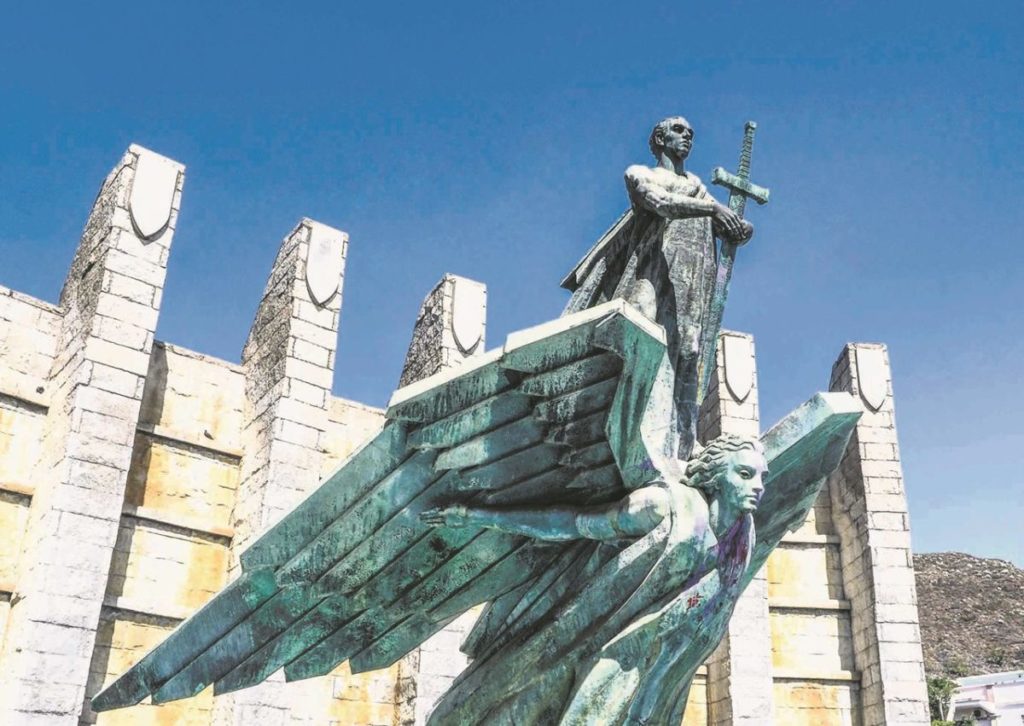
Santa Cruz de Tenerife Council Rejects Proposal to Remove Franco Monument
The Santa Cruz de Tenerife City Council has voted against a proposal to remove the city’s monument to Francisco Franco, citing the need for further legal clarification from regional and national authorities.
The Santa Cruz de Tenerife City Council has voted against a proposal to immediately remove the city’s monument to Francisco Franco. The motion, put forward by the Socialist Party (PSOE), was defeated by a majority coalition of the Canarian Coalition, the People’s Party (PP), and Vox.
The vote follows a recent decision by the Canary Islands government not to grant the monument "Asset of Cultural Interest" (BIC) status. This has sparked a debate over how to apply Spain’s Democratic Memory Law. PSOE spokesperson Patricia Hernández argued that the city has no reason to delay the monument's removal. However, Mayor José Manuel Bermúdez and the governing coalition urged caution, stating that the council cannot act until it receives formal guidance from the regional government and the Ministry of Democratic Memory, especially since a previous legal catalog of such monuments was annulled by the courts.
The disagreement goes beyond administrative procedure, touching on how to interpret history and art. Those who voted against the removal defended the work of sculptor Juan de Ávalos, citing its artistic merit and claiming it is valued at 50 million euros. Supporters of the monument also pointed to the sculptor’s own history of suffering reprisals during the Franco regime, arguing that the piece should be viewed as a "monument to peace" rather than an ideological symbol. The Canarian Coalition suggested that if the central government believes there are legal grounds for demolition, it should take direct responsibility for the action.
This situation highlights the ongoing tension between heritage preservation and the enforcement of memory laws. While the PSOE accuses the local government of using technicalities to avoid complying with the law, the city council maintains that it must ensure any action is legally sound to avoid future court challenges. For now, the monument remains in a state of administrative limbo while the city waits for national and regional authorities to clarify its legal status.