
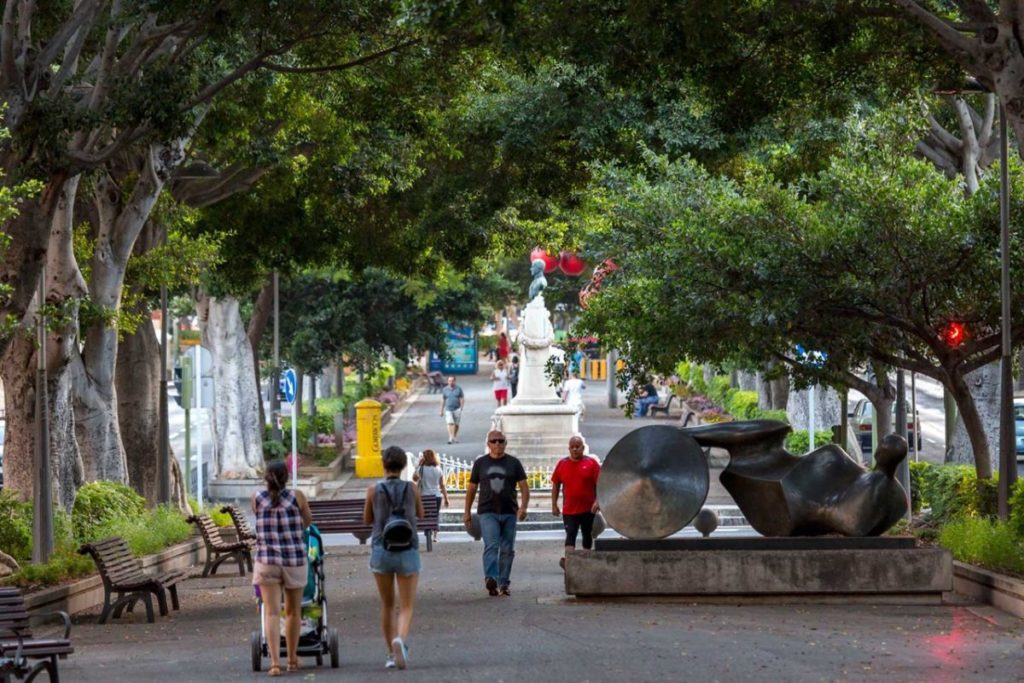
Santa Cruz de Tenerife Battles Wasp Infestation Threatening Iconic Indian Laurel Trees
Santa Cruz de Tenerife is testing endotherapy treatments to combat a wasp infestation threatening its iconic Indian laurel trees while simultaneously intensifying maintenance efforts to address the decline of the city's urban ficus population.
Santa Cruz de Tenerife is facing a new threat to its iconic Indian laurel trees. During a recent City Council meeting, officials confirmed that a species of non-pollinating wasp has begun infesting the trees, causing abnormal growth in new shoots and the development of leaf galls.
Public Services Councilor Carlos Tarife stated that the City Council is working closely with the Canary Institute of Agricultural Research (ICIA) to stop the spread of the pest. Authorities are currently testing plant endotherapy—a method of injecting treatments directly into the tree—at García Sanabria Park to see how the laurels respond. In other areas, the city is using a mix of treatments, with tree removal serving only as a last resort, as seen recently on the Rambla.
This new challenge adds to the ongoing health struggles of the city’s urban trees. About 10% of the capital’s ficus trees have been declining, showing signs of leaf loss and general deterioration. To help, the City Council has stepped up maintenance efforts, including better irrigation, foliar fertilization, and specialized pruning techniques.
The management of these green spaces has sparked political debate, particularly following the removal of 25 trees that could not be saved. However, the Parks and Gardens department maintains that their interventions are working, noting that improving soil quality and expanding root space have led to positive results. The city plans to expand these regeneration efforts to the Las Tinajas area, aiming to protect these trees, which are a defining feature of the Santa Cruz landscape.