
Santa Cruz Council Votes Against National LEZ Mandate
Santa Cruz City Council voted to ask the Spanish government to cancel a national law mandating Low Emission Zones, arguing the blanket rule is impractical for the city's unique characteristics.
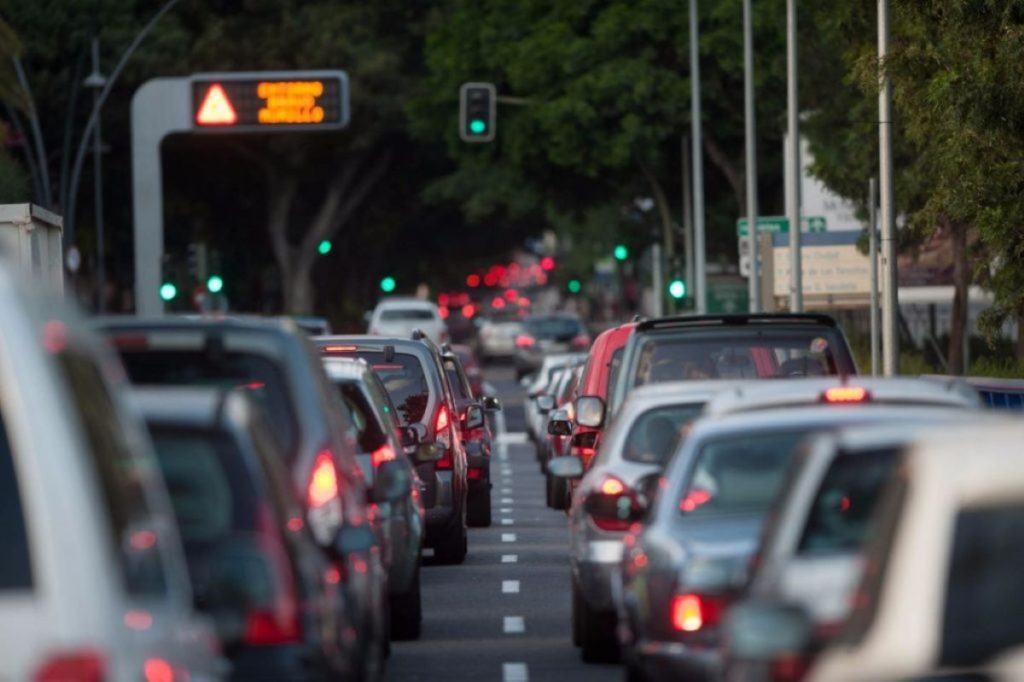
Santa Cruz City Council has pushed back against a national rule. This rule forces cities with over 50,000 residents to set up a Low Emission Zone (LEZ). The City Council has already been working on ways to control and limit traffic in the city center to cut down on carbon dioxide emissions.
Yesterday, the city council held a full meeting. Following a proposal from the Vox party, which was discussed with the ruling parties (CC and PP), the council voted to ask the Spanish government to cancel Article 14.3 of the Climate Change Law. The PSOE party voted against this. This law originally said LEZs should have been in place by 2023, but because it's so complicated for cities to set up, it's been delayed until 2026.
The council's decision is based on the belief that "Low Emission Zones aren't a good or practical solution for cities like Santa Cruz, which have their own unique urban, social, and economic characteristics. This rule comes from the central government and doesn't consider the specific needs or local situations of the cities it affects."
Because of this, the City Council will demand that the government cancel Article 143 of the law. They also want the government to officially recognize that local councils should have the freedom to create their own transport plans that suit each city's layout. This would stop blanket rules and allow Santa Cruz to put in place solutions that are agreed upon, make sense technically, and are fair – protecting health, businesses, and people's right to travel.
Alejandro Gómez, a spokesperson for Vox, said that "the way the LEZ is planned and implemented only limits residents' freedom and hurts businesses. It's a model forced on us from Brussels, then applied in Spain, which restricts movement and harms families and workers by making travel harder and penalizing those who can't afford a new car."
Evelyn Alonso, the councilor for Mobility, added that "we need to make progress with sustainable transport policies, and we're not against the law itself. However, we are against the PSOE's demands and their threat to cut public transport funding if we don't comply. This rule is confusing and has clearly failed; out of the nine Canary Island cities required to set up an LEZ, Santa Cruz is the only one that has made any real progress."
The mayor, José Manuel Bermúdez, stressed that "the city has already met its commitments under the Covenant of Mayors to cut emissions, aiming for a 30% reduction by 2030. Our disagreement is with the mandatory nature of the LEZ and the penalties for not following it. That's why we're asking the government to change an article that doesn't make sense and isn't a practical solution for our city."
On the other hand, socialist spokesperson Patricia Hernández criticized the "change of heart" from the CC and PP parties regarding the LEZ. She pointed out that "both parties supported this regulation in Congress, but now they reject it here. This is all because the Mobility councilor has messed it up with rules that courts have overturned and through very poor management of this department."
Meanwhile, PP spokesperson Carlos Tarife argued that "the law started as a suggestion, but Pedro Sánchez's government turned it into a mandatory rule. This has led to legal challenges wherever it's been put into practice."
In a meeting where all proposals and documents were approved, the council also gave the green light to an agreement between the City Council, Port Authority, Cabildo, and the Canary Islands Government. This agreement involves an 80 million euro investment to build the Port-City building at Muelle de Enlace. This new development will feature a cruise and ferry terminal, shops, restaurants, and pedestrian walkways on its roof.
The council also approved a 41.7 million euro plan to build 263 affordable homes on city land in María Jiménez and Cuevas Blancas. Another unanimous approval was for an agreement between the City Council and IASS to provide a Home Stay Service for elderly people. With the PSOE abstaining, the council also supported bringing IMAS into the main City Council structure and canceling a rule to make municipal nursery schools free from January.
To mark International Children's Day, the council unanimously backed a proposal to protect children's rights and well-being. They also supported continuing to work with the Cabildo on ways to reduce flood risks in vulnerable areas during heavy rain. Finally, a motion was approved to push for Carnival to be declared an Intangible Cultural Heritage of Humanity. This will involve research teams looking into its history and setting up a dedicated university course.
At the PSOE's request, the council agreed to change the rules for the "Canarian Creators for Local Commerce" project, run by the Development Society. The City Council will now cover the costs of making, maintaining, replacing, and installing the chosen artworks. This project aims to use art to boost the shopping areas of La Rambla and Salamanca.
The council also approved the 2026 weekly rest schedule for taxis. This means each taxi, depending on its license plate letter, will have 46 days off per year, plus an additional 47 days when they can choose not to work.
Yesterday, the City Council approved a proposal from the CC, PP, and PSOE parties to mark November 25th and work towards ending violence against women. Vox voted against it. The motion remembered the 1,330 victims recorded since 2003.
Vox explained they wouldn't support "an ideological motion that allocates money to actions that don't solve the problem." This angered Popular Party councilor Zaida González, who, in tears, listed the 38 women murdered this year and accused Vox of criticizing without offering any solutions.
A street in Santa Cruz will be named after Corina Machado. She is set to receive the Nobel Peace Prize on December 10th for her work defending human rights and promoting freedom and democracy in Venezuela.
The proposal, put forward by independent councilor Juan Manuel Hermoso, was unanimously supported by all groups and applauded by many Venezuelans attending the meeting. The council agreed to start the process of awarding special honors to the Venezuelan political leader.