
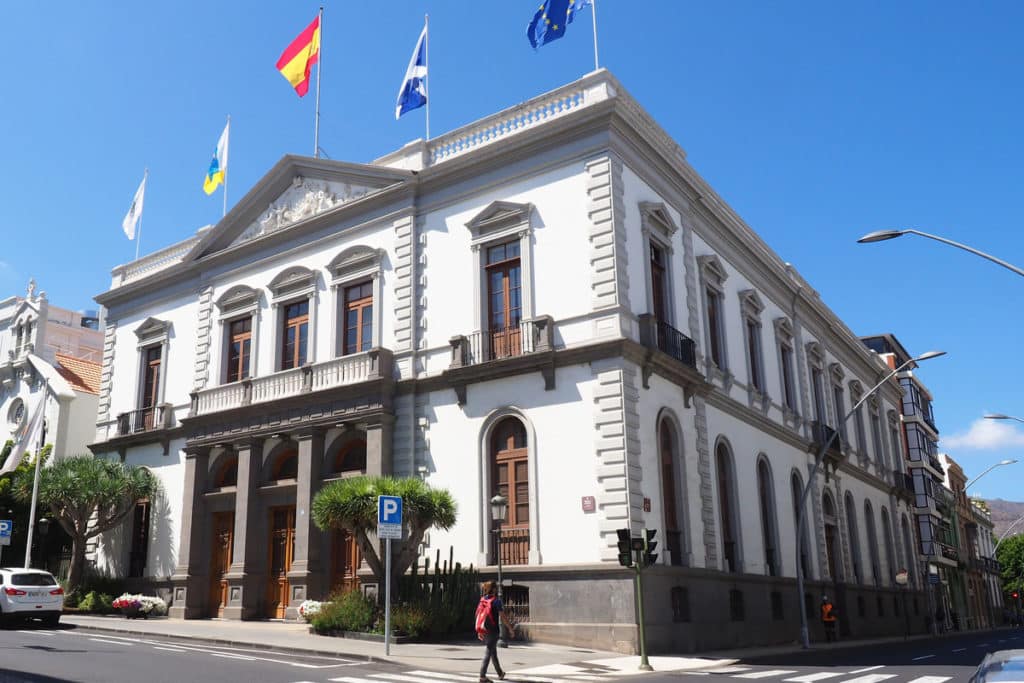
Santa Cruz Council Passes Record €381.2M Budget
Santa Cruz City Council provisionally approved a record €381.2 million budget for 2026, the largest in its history, despite opposition criticism over housing and tax policies.
Yesterday, the Santa Cruz City Council provisionally approved its 2026 budget, setting it at a record 381.2 million euros. This marks a 4.6% increase from 2025, making it the largest budget in the city's history.
The budget passed with votes from the ruling coalition (Coalición Canaria and PP) and independent councilor Juan Manuel Hermoso. The PSOE and Vox parties voted against it, after their proposed amendments were rejected.
According to Finance Councilor José Alberto Díaz-Estébanez, the budget is divided into three main areas:
- Personnel (Chapter I): 106 million euros, nearly a third of the total.
- Public Services (Chapter II): 156 million euros (40% of the budget) for things like cleaning, roads, lighting, water, and parks.
- Investments (Chapter VI): 79 million euros, a 20% increase from 2025. This figure is expected to reach 100 million euros once leftover funds from the previous year are added.
Díaz-Estébanez stressed that the budget aligns with the council's economic plans, ensuring stability and the ability to invest, allowing major projects to continue.
Key allocations include:
- Social Welfare: 32.7 million euros
- Mobility: 47.5 million euros, including a 20 million euro loan to update the bus fleet.
- Public Services: 74 million euros
- Culture: 6.7 million euros
- Urban Planning: 9.7 million euros
- Citizen Security: 10.6 million euros
- Festivities: 11.3 million euros
- Development Society: 6.4 million euros
- Municipal Housing: 5.2 million euros. Díaz-Estébanez noted that this housing fund will change its approach, with financial contributions tied to land contributions.
The Finance Councilor also pointed out that the new budget aims for "greater collection efficiency," expecting a 5.2% increase in revenue without raising taxes. Instead, he said, it focuses on "collecting more and better from those who owe," referring to a 50% increase in the waste collection fee starting next year. He also announced that the City Council has applied for a 35 million euro bank loan to fund projects like Viera y Clavijo and the introduction of brown recycling bins (3.9 million euros).
PSOE spokesperson Patricia Hernández voiced her party's opposition to the 2026 budget. She criticized that "zero euros are allocated to the construction of new housing, only to the purchase of land," despite the City Council already owning suitable land in areas like El Rosarito, Cuchillitos, and Barranco Grande, which remains undeveloped. Hernández argued that this focus on land acquisition stems from the lack of a General Plan, preventing the city from addressing its primary housing needs.
She further criticized the absence of funds for the parking plan, which aimed to create 1,868 spaces by 2027, and "zero euros for new housing or the installation of elevators in La Salud." Employment policies, she added, received "almost nothing." In stark contrast, Hernández highlighted a significant increase in the municipal advertising and propaganda budget, set at 2.9 million euros. This, she noted, is triple the 783,000 euros allocated to this area in 2022.
Vox spokesperson Alejandro Gómez also criticized the council's management. He argued that despite an expected increase in funding from other administrations in 2026, the budget doesn't include any tax reductions to ease the financial burden on Santa Cruz residents, especially with the upcoming waste collection fee increase on January 1st.
Gómez called the projected increase in municipal income from "sanctions, fines, and surcharges" — expected to exceed 11 million euros, including over 4.6 million from traffic fines — "abusive." He claimed this shows a "collection-focused approach that relies on citizens' errors and sanctions." Gómez accused the government of burdening residents to achieve budget stability by maintaining high collection rates instead of cutting "superfluous expenses" like advertising and propaganda, which he noted would be similar to the education and youth budgets.
Carlos Tarife, PP Councilor for Public Services, criticized the socialists for "rejecting a budget that reflects Santa Cruz's true economic importance as the engine of the Archipelago, with significant investment in social issues, employment, and major infrastructure." He told former mayor Patricia Hernández that she "should go apologizing, door to door, to every resident of Santa Cruz," because the PSOE is not supporting a budget that would lead to "a cleaner city, with better parks and gardens, more local police, or a 140 million euro framework agreement for public road investments over five years."
Tarife also challenged the PSOE to "contribute something more than criticism" to Santa Cruz. He urged them to lobby the national government and its president for more housing, funding for island trains and trams, or a large sports complex in the capital, similar to one achieved by the socialist mayor of La Laguna. "But you do not collaborate with this municipality," he concluded.
Finally, Mayor José Manuel Bermúdez stated that "the budget will improve residents' quality of life, boost economic activity, and move Santa Cruz towards being a more dynamic and unified city." He emphasized that "these accounts strike a crucial balance between investment and social policy, strengthen public services, and expand the social safety net to ensure no one is left behind. We have the largest investment in history with the lowest tax burden." Bermúdez concluded that "it is a good budget," despite uncertainties about the national situation in 2027. He highlighted the significant investment effort, which will exceed 100 million euros to transform the city. "We have more projects than money," he admitted, "which means we must attract European or private funds at no cost to the City Council."