
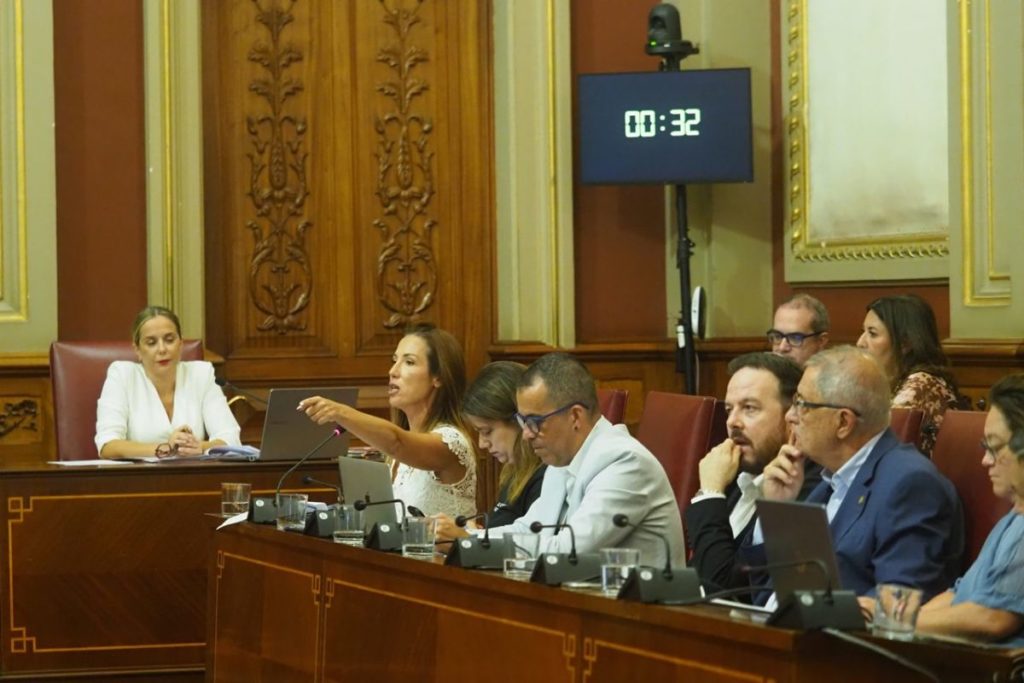
Santa Cruz City Council Faces Political Clash Over Cleaning Contracts and Urban Planning
Santa Cruz de Tenerife’s City Council is facing opposition scrutiny over street cleaning contract performance while simultaneously announcing plans for an external audit, a new urban development plan, and the integration of its culture department into the central municipal structure.
Managing public services in Santa Cruz de Tenerife has once again sparked heated political debate. During the latest City Council meeting, the opposition, led by the PSOE, questioned the effectiveness of the city’s street cleaning contract, specifically raising concerns about whether the contractor, Valoriza, is meeting its obligations.
Socialist spokesperson Patricia Hernández pointed to the alleged underuse of specialized cleaning equipment. Citing data on the mileage covered by sweepers and street washers, the party argued there is a significant gap between what was promised in the contract and the work actually being done. In response, the government team defended the municipal technicians and challenged the opposition to take legal action if they believe any laws have been broken.
Councilor for Public Services Carlos Tarife admitted that the current contract has its flaws. However, he blamed the city’s cleanliness issues on external factors—such as a lack of rain and poor public behavior—rather than a lack of oversight. To address these issues, the City Council has ordered an external audit to help redesign the next contract, due in November 2027. This future plan includes more frequent cleaning, 230 additional staff members, and the expansion of organic waste collection to every district.
The meeting also covered other key city issues. Regarding urban planning, the Council announced it will outsource the drafting of a new General Urban Development Plan (PGO), a project that has been stalled for eight years since the 2013 version was annulled. Meanwhile, the city’s Low Emission Zone (ZBE) remains in legal limbo; the Mobility Department confirmed that regulations are currently being challenged in the High Court of Justice, creating uncertainty for the 2029 roadmap.
Regarding infrastructure, the local government described recent water supply issues as isolated incidents. Even so, they have scheduled a meeting with the Association of Property Administrators to discuss potential financial support for homeowners dealing with internal plumbing problems.
Finally, the Council approved a major administrative change: the Autonomous Organization of Culture will be integrated into the central City Council structure starting in January 2027. Mayor José Manuel Bermúdez stated that this move aims to streamline the management of landmarks like the Guimerá Theater and the Museum of Fine Arts, ultimately making the city’s operations more efficient.