
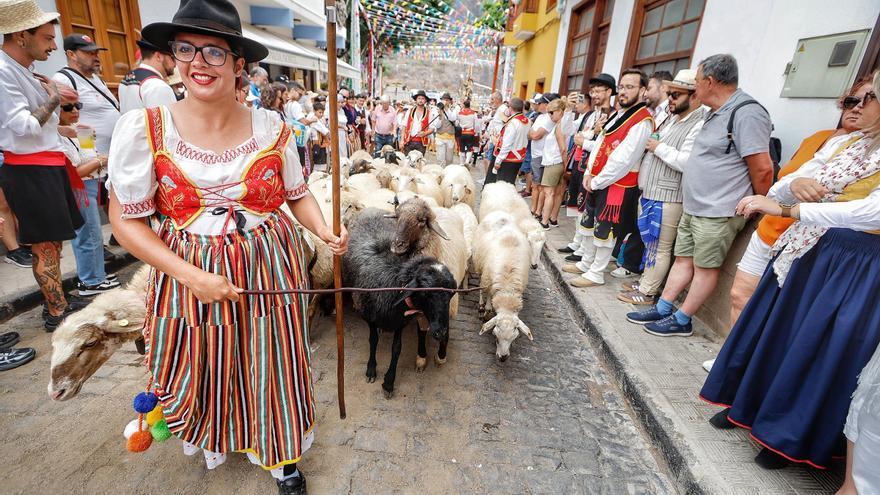
Puerto de la Cruz: The story of a forgotten pilgrimage to the Chapel of Saint Amaro
In Puerto de la Cruz, Spain, they remember the formerly popular pilgrimage to the Chapel of Saint Amaro, which once gathered thousands of people, but over time has lost its mass appeal.
In January, when the Orotava Valley is still cold and the sea near Martianez is just beginning to awaken, the road to La Paz seems special.
Young and old people walk uphill with laurel branches, women huddle in shawls, and children stumble. You can hear whistling, a quiet guitar, and in the distance, you can see a small white chapel waiting for them at the top.
It is the eve of January 15, the day of Saint Amaro. On this day, the city, now called Puerto de la Cruz, begins to celebrate. This holiday has been loved and celebrated here for many centuries.
Although over time the pilgrimage to Saint Amaro has been somewhat forgotten, it has left behind a history of an ancient shrine, sincere faith, and a date that brought people together from all over the valley every year.
The Chapel of Saint Amaro, located in the La Paz area, is one of the oldest temples here. It has been mentioned since 1591.
Initially, it was a small oratory on the outskirts when Puerto was still part of La Orotava. Later, in addition to Saint Amaro, it was dedicated to the Virgin Mary de La Paz, after whom the area was named.
The chapel looked simple: a white rectangular building with wooden doors. Inside, there was a statue that greeted travelers and locals.
Saint Amaro (sometimes confused with Saint Maurus) was considered by locals to be a healer, a protector of people with disabilities and those with bone pain.
In those days, when people worked hard in the fields, fishing, or as loaders, asking for relief from bone pain was very important.
Therefore, it is not surprising that over the years the holiday has become not only religious but also fun: with music, young wine, picnics in the shade, and lively traffic between the city center and the chapel.
The celebration took place in two stages. On the eve, people went to La Paz with lanterns and guitars, and some stayed there until late at night.
And on January 15, after the service, there was a procession through the streets, and a large crowd of people filled the roads and slopes.
Local newspapers wrote that many people came not only from Puerto but also from La Orotava and other parts of the valley. The atmosphere was more relaxed than at other religious holidays.
After the religious holiday, a folk festival began, which sometimes lasted longer than it should have.
Due to the large number of people on the pilgrimage, security had to be increased. In the 18th century, the authorities "came the day before" to prevent riots. And in 1735, a murder even occurred during the celebration, which was remembered by the locals for a long time.
This happened on many large ancient pilgrimages: where there are many people, music, and wine, there are quarrels. But these records show how big the San Amaro holiday was in its best times.
Over time, the holiday lost its popularity. Traditions changed, the La Paz area was built up, the holiday schedule in Puerto changed, and other rituals became more important.
The pilgrimage gradually disappeared as a mass event. Only the chapel, the name of the area, and the memories of the locals about those January days when people walked along the road and sang remained.
Anyone who now goes up to La Paz sees a residential area and observation decks overlooking the Atlantic Ocean. The chapel still stands, modest, as a reminder of the early days of Puerto.
The pilgrimage is gone, but its trace remains in the name La Paz, in the 1591 chapel, and in the old documents that tell of nightly vigils, large crowds of people, and of January, which was once inextricably linked with Saint Amaro.