
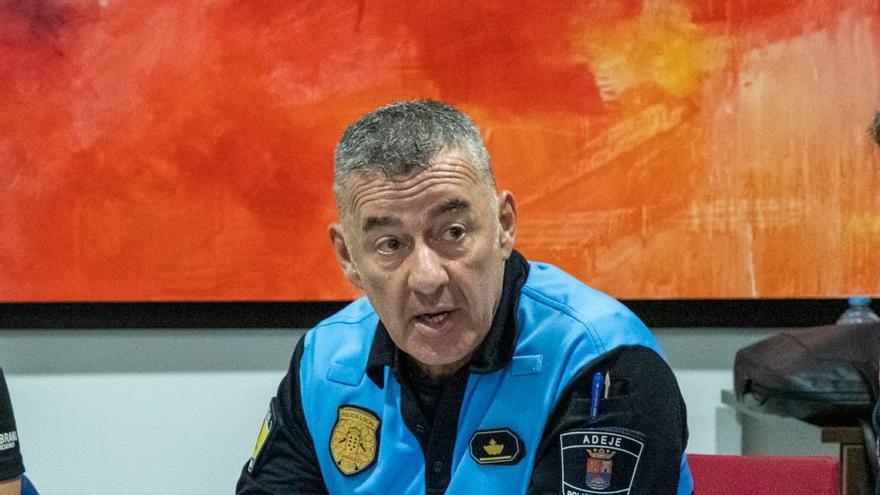
Reyes Appointed Chief Sub-Commissioner, Launches New Anti-Crime Units
Chief Sub-Commissioner Ricardo Reyes Rodríguez, a three-decade veteran, has launched new police units and joint operations with the National Police to tackle street crime and counterfeit goods since his October 8 appointment.
Ricardo Reyes Rodríguez became chief sub-commissioner on October 8th. He's been with the police force for three decades, starting at the lowest ranks. Already, his leadership is showing results, with new units being formed and joint operations with the National Police to tackle street crime.
He joined the force in 1995, meaning he's been serving for over 30 years.
Before joining the police, he spent six years in private security as a security guard, where his interest in the field began.
Studying for the police entrance exams while working was tough. He prepared for over three years, even working during the 15-day exam period for an interim police officer role.
He's worked in many different areas: patrols, Community Police, the Family Care Unit, the Citizen Security Operations Group (GOSC), the narcotics control team, authority protection, and the Beaches service. Now, he's at Headquarters.
His time in the Citizen Security Operations Group, where he spent almost six years, was particularly valuable. They dealt with all kinds of issues, making it a very rewarding experience.
He finds it hard to put into words, but he feels immense pride in serving the public and ensuring citizen security.
The most important value, he believes, is serving the public – putting the community's needs before their own.
His experience starting "from the bottom" and knowing the streets well is a huge asset. It helps him understand and improve office work, plan operations more effectively, and truly grasp residents' problems.
Thanks to strong cooperation with the security councilor and the mayor, two new units have been launched. The first is the Environment Unit, staffed by four officers all week. The second is the Beaches Unit, which is crucial for the coast, especially with the significant issue of street vending. This irregular activity involves many people, and the police are tackling it with the National Police.
They've carried out important operations, seizing nearly 3,000 items in several instances. This led to two arrests and nine people being investigated for selling counterfeit goods, which is a crime against industrial property.
Merchants are complaining about the rise in street vending. The police are dedicating more officers and hours to this issue. While street vending is usually just a minor offense, if counterfeit goods are involved, it becomes a matter for the justice system. They are increasing their presence and operations to try and prevent this problem.
While daily operations are ongoing, they conduct two major joint operations with the National Police each week. Currently, two groups with a total of 14 officers are assigned to this, and they plan to add more personnel as new police recruits join.
The Security Councilor has set important goals, which are also based on the police's own experience and understanding of local issues. They know efforts are underway to increase the police force to cover more services. Even with help from the Civil Guard and National Police, they can't cover everything. More staff would allow them to strengthen specialized groups, as officer specialization is crucial for the future.
With more staff, they would like to bring back the Citizen Security Operations Group to handle services they currently can't. They need legal changes to allow them to hire more officers in each recruitment round.
The force currently has 125 officers. Their goal is to reach the ideal number for the municipality, which a study suggests is 169, considering factors like crime rates, population, specialized units, and tourist numbers. However, with officers able to retire at 60, it's hard to reach this target as new hires often just replace retirees. They would be very happy to reach 150 officers.
The goal, set with local leaders, is to add 20 more officers in the next two years, which is the maximum allowed by law. Since 2023, nearly 30 new officers have already joined.
Collaboration is very important. This includes drug prevention efforts, talks in high schools, and patrols in public squares to deter small-scale drug dealing. Cooperation with the Civil Guard and National Police is excellent, leading to actions like closing cannabis clubs.
He believes educating the public is key – teaching values and ensuring citizens understand and act on important messages. He points to residents' cooperation during storm Claudia, when very few people drove their cars, as a great example.
This issue isn't new; they've always been vigilant and will continue to be. While they don't have specific data to show a rise or fall, they encourage citizens to report incidents and take precautions to help prevent undesirable situations. However, he stresses that people shouldn't be overly alarmed.
Responsibility for these matters primarily lies with the National Police and Civil Guard. The local police collaborate with them as much as possible, but these forces also need more staff. Minor crimes significantly harm the tourism sector. He also emphasizes the role of the justice system and laws in dealing with these offenses, stating that a combination of security and justice is needed for better results.