
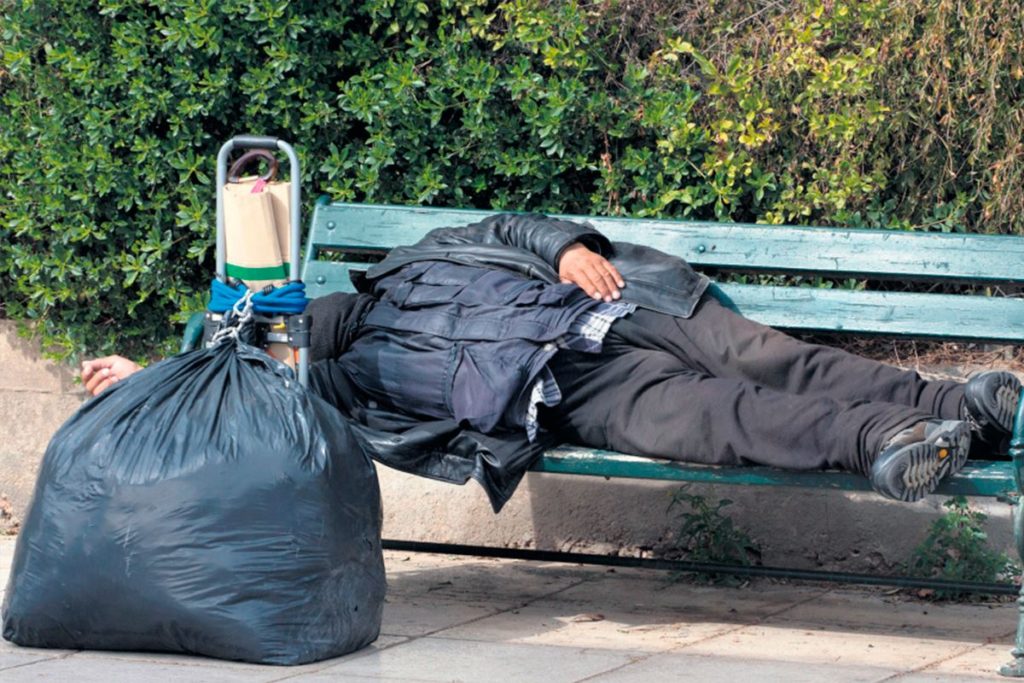
Report Reveals Hidden Homelessness Crisis in Arona Amid Tourism Boom
A new report by Cáritas Diocesana reveals a hidden crisis of extreme residential exclusion in Arona, where hundreds of people, including families, are living in informal settlements without access to basic utilities.
A new report, People in Situations of Extreme Residential Exclusion in the Municipality of Arona 2025, has highlighted a stark contrast in one of the Canary Islands' most popular tourist destinations. Commissioned by the local council and produced by Cáritas Diocesana of Tenerife, the study reveals a deep social divide that challenges the area's reputation for prosperity.
While the report identifies 307 homeless individuals between 2024 and 2025, experts warn this is likely an underestimate. When accounting for those living in informal settlements—such as caves, shacks, caravans, and unfinished buildings—the true figure is estimated to be between 470 and 885 people.
The findings also challenge common misconceptions about homelessness in the region. Based on 172 interviews, the data shows that this is not a temporary issue for most; over half of those affected have been homeless for at least a year, and 14% have been living in these conditions for five years or more. The demographic is also shifting, with a rise in the number of women and a concerning increase in families with minors.
Migration plays a significant role, with nearly 70% of those affected being foreign nationals. Non-EU citizens, who make up 36.2% of this group, face additional bureaucratic barriers to accessing basic support. This vulnerability is compounded by a lack of essential services: over half of those surveyed have no access to drinking water, and more than 77% receive no financial aid or subsidies.
The report identifies the primary causes of this exclusion as a lack of social support networks (48.6%) and administrative hurdles (15.3%). The health consequences are severe, with 37.8% of respondents reporting declining health since losing their homes, alongside high rates of addiction and dual diagnoses.
Cáritas has called on authorities to take immediate action, arguing that it is unacceptable for people to live without basic utilities like water and electricity in a modern society. In response, the Arona City Council has pledged to work with the Island Council of Tenerife and the regional government to develop a coordinated plan. The goal is to move beyond simply tracking statistics and toward urgent, human-rights-focused interventions to address a crisis that has long been hidden behind the region's tourism industry.