
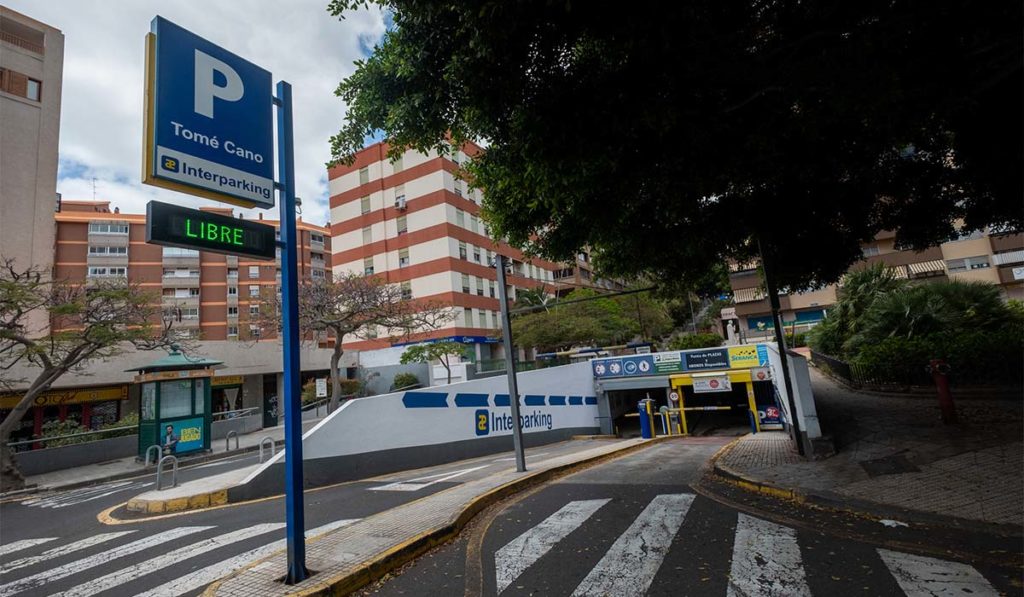
Report Highlights Significant Parking Cost Disparity Between Santa Cruz and La Laguna
A report by the Urban Centro El Perenquén association reveals that drivers in Santa Cruz de Tenerife pay significantly higher parking fees than those in San Cristóbal de La Laguna due to differences in municipal management and a lack of affordable pass options.
A new report from the neighborhood association Urban Centro El Perenquén highlights a stark difference in parking costs between Santa Cruz de Tenerife and San Cristóbal de La Laguna, suggesting that drivers in the capital are paying significantly more.
The study attributes this gap to how each city manages its parking. La Laguna runs its facilities directly, while Santa Cruz outsources them to private companies. This difference in management has a direct impact on costs: parking in La Laguna costs 0.60 euros per hour, whereas in Santa Cruz, prices range from 1.26 to 2.55 euros per hour.
For a regular user—calculated at 80 hours of parking per month—this adds up to a major financial difference. A driver in La Laguna pays 48 euros per month, while a driver in Santa Cruz pays 139 euros. Furthermore, La Laguna offers affordable monthly passes, including nighttime options for 30 euros and 24-hour access for 50 euros. The association notes that such options are either unavailable or poorly advertised in the capital.
The report also criticizes the Santa Cruz City Council for a lack of transparency. While La Laguna clearly publishes detailed information on taxes and payment plans, the association claims the capital only provides maximum per-minute rates, leaving out details about taxes and daily caps.
In response, El Perenquén is calling on the Santa Cruz City Council to improve transparency and introduce monthly parking passes to help residents and workers. The group also estimates that the capital needs an additional 8,000 parking spaces to meet current demand. This debate has reignited local discussions over whether direct municipal management or public-private partnerships are more effective for urban mobility.