
Record Cocaine Bust Reveals Turkish Mafia's European Expansion
Spanish police seized a record ten-ton cocaine shipment in the Atlantic, revealing the increasing involvement of Turkish groups, including powerful drug lord Naci Yılmaz, in trafficking drugs into Europe.
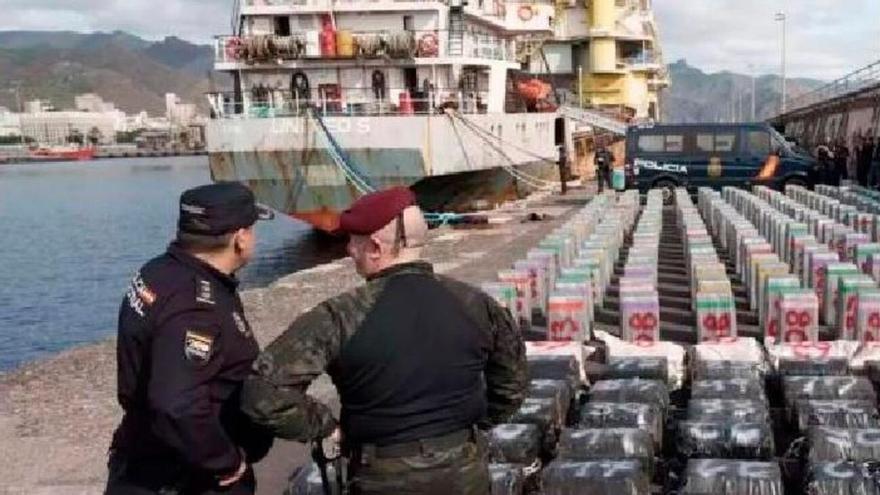
A ten-ton cocaine shipment, the biggest ever found at sea, was recently seized in the Atlantic. This bust shows that Turkish groups are increasingly involved in moving drugs into Europe. Reports say the operation happened in January, about 500 miles from the Canary Islands. It uncovered a clever way to hide the drugs – they were mixed in with layers of salt. The cocaine was meant for the Canary Islands and other European countries.
Spain's National Police Narcotics Brigade stopped the ship, which was old and on its last journey before being scrapped. Thirteen crew members were arrested: seven from India, four from Turkey, and two from Serbia. The two Serbs were believed to be in charge of making sure the drugs got delivered. The ship had left a Turkish port, sailed to waters near Brazil, picked up the drugs off the coast of Fortaleza without stopping, and then started its trip back to Europe. The plan was to unload the cocaine near the Strait of Gibraltar. From there, it would be moved onto speedboats and distributed across southern Spain. After that, the ship would go back to Turkey.
The fact that four Turkish citizens were among those arrested on the ship, named "United S," wasn't a one-off event. The Spanish investigation quickly led to action in Istanbul. Days later, Turkish prosecutors ordered the arrest of about a dozen more people across six provinces, who were thought to be linked to the 200-million-euro drug shipment. Among those arrested in Turkey, Çetin Gören and Ahmad Almassri were notable, as both were directly suspected of organizing the transport.
The operation has revealed a complex international drug network. Turkish authorities have issued international arrest warrants for at least three more people. These individuals are already known to Spanish police who fight organized crime on the Costa del Sol. Among those identified are Ozan Toprak, reportedly arrested in Dubai, and Naci Yılmaz, also known as Siirtli Naci or Speedy. Yılmaz is a very powerful figure in moving cocaine from South America and heroin from the Middle East. He's also linked to the murder of lawyer Serdar Öktem in Istanbul. Some even see him as the successor to Urfi Çetinkaya, known as "the Paraplegic" or "the Turkish Escobar."
There's some debate about Yılmaz's true rank in the drug trade. In Turkey, he's considered less important than Joseph Johannes Leijdekkers, a Dutchman known as "Jos the Fat One." Leijdekkers is a major player in bringing cocaine into Europe, operating from Sierra Leone, and the Netherlands offers 200,000 euros for his capture. However, the Spanish National Police see things differently. Spanish investigators who specialize in the Turkish mafia believe Yılmaz is at the very top. They don't think the "United S" shipment, which is the largest ever linked to a Turkish group, could have happened without his involvement.
It's suspected that Yılmaz might be hiding on the Costa del Sol, a place he knows well, using fake identities. This idea is supported by the fact that several of his most trusted associates are in the area. These close associates, some of whom are now in prison or on the run, live and run businesses in the region. Their activities include managing a famous restaurant in Marbella's marina, along with real estate companies, food export, and trading raw materials. Spanish investigators believe one of these businessmen is Naci's second-in-command. He has been arrested in Turkey for his suspected link to the cocaine from the "United S," which is currently docked in Tenerife.
These groups are thought to have arrived in Spain between 2017 and 2018, around the same time many of their businesses were set up. They are described as secretive and independent organizations, but they have strong ties to powerful gangs, like Dutch groups or those controlling the Balkan route – a long-standing path for drug trafficking from the Middle East. This situation highlights how international organized crime is changing and how important Spain's location is as a main entry point for drugs into Europe.