
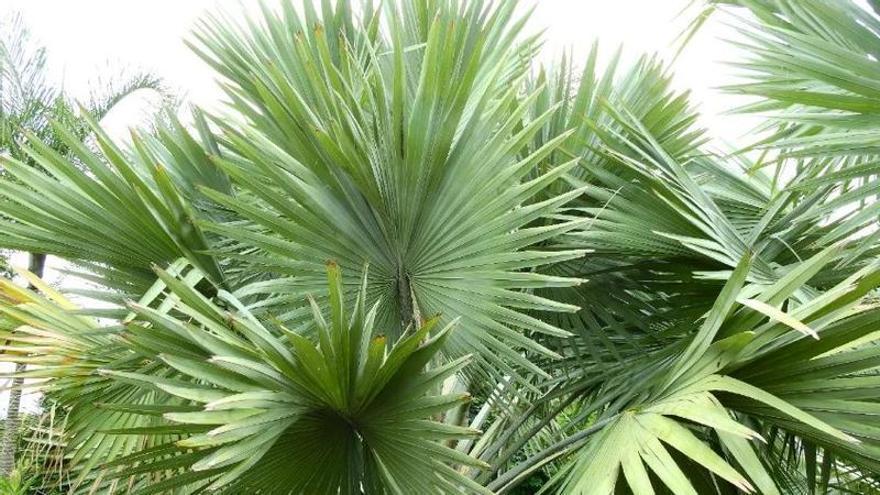
Rare "Suicide Palm" Blooms in Tenerife, Signals End of Life
A rare Ceylon palm at the Palmetum in Santa Cruz de Tenerife is currently undergoing its once-in-a-lifetime, largest-in-the-world flowering event, signaling its impending death and marking only the second such occurrence ever seen in a European garden.
A rare and short-lived natural event is currently unfolding at the Palmetum in Santa Cruz de Tenerife. It's the flowering of the Ceylon palm (Corypha umbraculifera), a phenomenon that happens only once every 30 to 60 years and signals the end of the palm's life. This is only the second time in history that this process has been seen in a European garden, and both occasions have taken place at the Palmetum.
The specific palm tree was planted in 1997 and began its reproductive phase in October 2025. Now, in January 2026, it has unfurled its enormous flower stalk, which stands between 5 and 7 meters tall and is visible from the garden's Red Route. This type of flowering is the largest in the world for any plant. It marks the culmination of a process called monocarpy, a botanical phenomenon where a plant flowers just once before it dies.
For decades, this palm quietly stores energy for one spectacular final act: releasing millions of flowers and, later, fruits. After using up all its reserves, the plant slowly dies over the following months. This process can be observed now and will continue until its structure completely decomposes.
This phenomenon is not just a biological curiosity; it's also a significant scientific and cultural event. The Corypha umbraculifera palm is not native to the Canary Islands but comes from Southeast Asia, where its leaves were traditionally used as a surface for religious manuscripts.
Experts at the Palmetum explain that this unique flowering is an evolutionary survival strategy. By flowering massively only once and after such long intervals, the plant produces so many seeds that predators cannot eat them all. This ensures that the next generation will germinate, even after the original palm dies.
With this milestone, the Palmetum of Santa Cruz de Tenerife strengthens its reputation as one of the world's most important botanical gardens specializing in palms. Built on a former landfill, it has become a global leader in plant conservation and a unique space for environmental education and research.
For anyone who loves botany, photography, or extraordinary natural events, this is an opportunity that won't come again for decades. The Palmetum's management encourages visitors to see it while the flowering lasts. In a few weeks, the flowers will give way to fruits, and eventually, the palm will completely disappear.