
RAE Launches 24th Edition of Spanish Dictionary with Digital-First Approach
The Royal Spanish Academy has released the 24th edition of its dictionary, featuring a digital-first approach and the inclusion of modern social and technological terms to better reflect contemporary language usage.
The Royal Spanish Academy (RAE) has released the 24th edition of its Dictionary of the Spanish Language (DLE), marking a major shift in how the institution works. For the first time, the dictionary was built using a digital-first approach, reversing the traditional process where the printed book set the standard for the web.
Beyond just adding new words, this update reflects the changing nature of modern society. The inclusion of terms like IA (AI), trans, gordofobia (fatphobia), ecoansiedad (eco-anxiety), and ciberataque (cyberattack) shows the Academy’s effort to keep pace with current technology and social issues. Other additions—such as AOVE (extra virgin olive oil), influencer, edadista (ageist), ceo, docuserie (docuseries), and ELA (ALS)—highlight how the language is absorbing anglicisms, new consumer habits, and evolving social and medical terminology.
The physical edition, published by Espasa, spans two volumes and 3,606 pages. RAE director Santiago Muñoz Machado defended the importance of the printed format, even as online searches for the dictionary reach 100 million per month. He emphasized the value of the physical book as a lasting bibliographic legacy. The new edition is massive, containing 99,990 entries, nearly 209,000 definitions, 85,000 usage examples, and over 54,000 etymologies.
A notable change in this edition is how gendered words are presented. The Academy has decided to write out feminine forms in full rather than using abbreviations. This change, which makes the dictionary easier to read, reflects a growing demand for clearer representation of nouns.
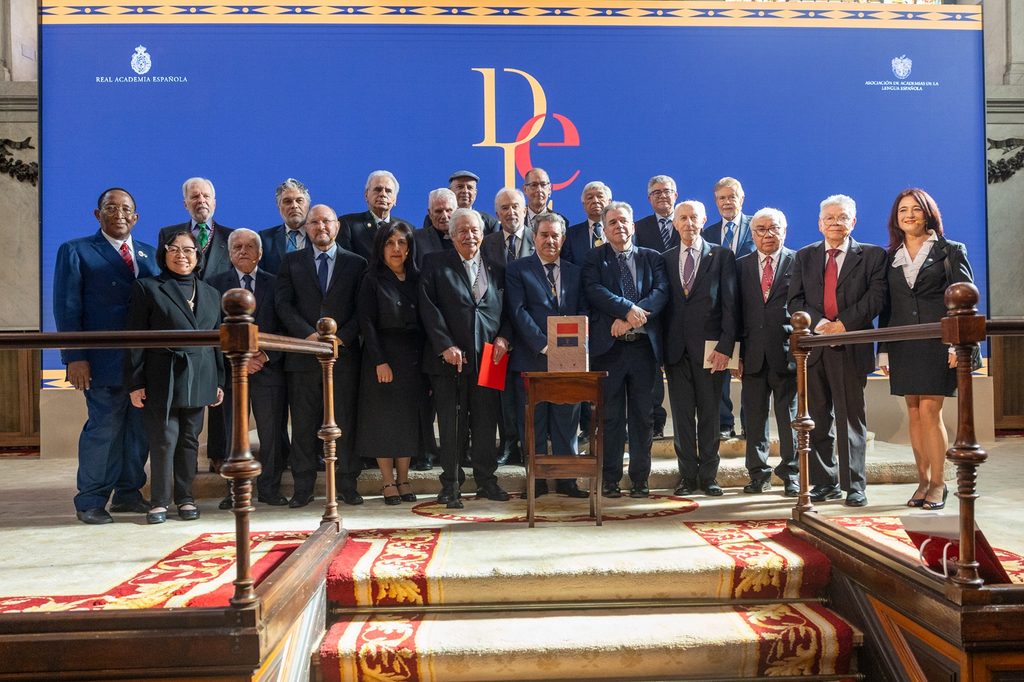
The launch event, which opened with a moment of silence for the victims of a recent train accident in Urda, Toledo, reaffirmed the dictionary’s role as the foundation of Spanish-language policy. By balancing a prestigious printed volume with a robust digital presence, the RAE is successfully bridging the gap between a classic cultural tradition and the fast-paced information age.